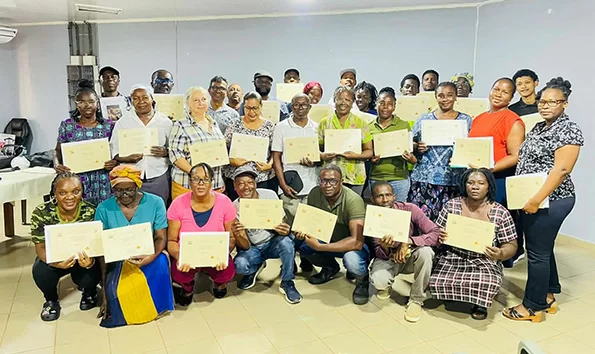
A cohort of 28 new and established small-scale farmers in the eastern Suriname city of Moengo has wrapped up a five-day intensive poultry farming training program, launched by the Directorate of Livestock under the country’s Ministry of Agriculture, Livestock and Fisheries (LVV), as part of a nationwide push to strengthen the domestic poultry sector across all administrative districts. The initiative is rooted in a clear national policy goal: to raise the share of locally produced poultry products on Suriname’s domestic market from the current 35% to at least 70%, cutting reliance on imported goods and strengthening national food security. Unlike many generic agricultural training programs, this course integrates both classroom theoretical learning and hands-on practical training, covering a full spectrum of critical topics that address common gaps for small producers. These include the design and construction of appropriate poultry housing, optimized nutritional strategies for different flocks, routine flock care, basic poultry anatomy, prevention and control of common poultry diseases, and essential business record-keeping to help farmers track costs and profits. LVV officials confirmed that this type of community-focused training is a core component of a national agricultural development program that will be rolled out across all districts and administrative ressort across the country. Trainees who completed the program reported high satisfaction, saying they leave the course motivated to put their newly acquired skills into practice on their own farms, and many expressed enthusiasm to encourage other aspiring farmers in their communities to enter the poultry sector. The LVV has emphasized that poultry farming represents an unusually accessible entry point for small entrepreneurs in Suriname, as it can be launched with a relatively low amount of starting capital and requires manageable levels of ongoing labor input. The sector, ministry officials note, offers viable growth opportunities for both small-scale subsistence producers and entrepreneurs looking to scale up their operations over time. Beyond boosting local supply, the expansion of domestic poultry production also directly contributes to two key national priorities: strengthening Suriname’s overall food security, and creating new, sustainable income streams for rural and community-based producers across the country. At the end of the five-day program, all participating farmers received official completion certificates to mark their participation. The program is one of several ongoing agricultural development initiatives the LVV has implemented to revitalize local food production and support smallholder farmers across the nation.