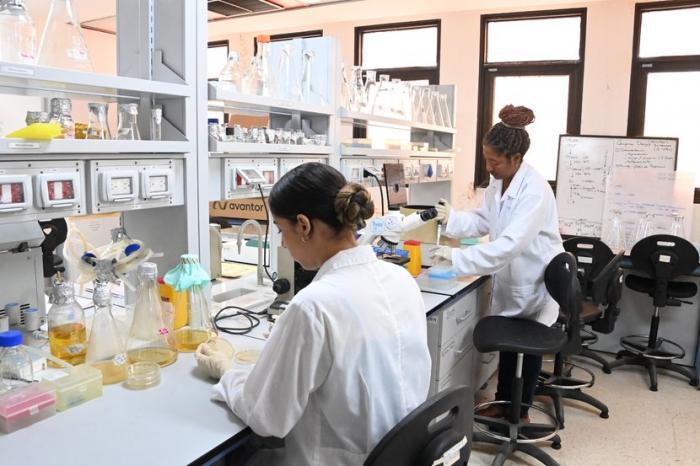
Marking World Health Day on April 7, 2026, global and Cuban health leaders have centered discussions on the critical role of cross-sector scientific collaboration, aligning with the World Health Organization’s 2026 theme “Together for Science.” The annual observance spotlights the urgent need for broad societal support for science-driven innovation to strengthen healthcare systems worldwide, and Cuba used the occasion to showcase its expanding domestic health research ecosystem and outline ongoing collaborative progress with international health bodies.
Dr. Ileana Morales Suárez, Director of Science and Innovation at Cuba’s Ministry of Public Health, opened the commemoration by emphasizing a foundational truth: evidence-based healthcare is the single most effective framework for reducing preventable deaths and improving population outcomes. Echoing the WHO’s slogan, she noted that inclusive scientific partnership, rather than isolated research, holds the key to tackling the most pressing 21st-century health challenges.
Morales Suárez shared detailed new data on Cuba’s growing health research sector, revealing that the country currently hosts 46 dedicated Science, Technology, and Innovation entities, more than 1,200 affiliated research institutions, and 2,334 active health-focused research projects. Of Cuba’s total national researcher workforce, 69% work within the health sector, amounting to 6,182 categorized professional researchers engaged in advancing public health outcomes across the island.
A core priority for Cuban health policy, she highlighted, is advancing the integrated One Health paradigm, a framework that ties the well-being of humans, animals, plants and entire planetary ecosystems into a single interconnected system. “The COVID-19 pandemic delivered an uncomfortable but unavoidable lesson: human, animal and environmental health cannot be separated,” Morales Suárez stated. “A threat to one is a shared threat to all.” In response to this reality, Cuba’s national government has made intersectoral collaboration a top policy priority, targeting key shared challenges including zoonotic disease spread, antimicrobial resistance, and cross-domain public health surveillance.
Looking ahead, Cuba reaffirmed its longstanding commitment to positioning scientific research as the cornerstone of all national health policies. The country is moving forward with increased public funding for health research and targeted initiatives to strengthen its domestic scientific ecosystem, with Morales Suárez emphasizing, “We will continue to invest in science for action, and build action that advances science.”
As part of the World Health Day commemoration, Dr. Mario Cruz Peñate, the Pan American Health Organization/World Health Organization Representative to Cuba, presented the results of the organization’s 2025 cooperation program on the island. One of the most impactful achievements highlighted was the national rollout of HPV vaccination for nine-year-old girls, supported by global vaccine alliance GAVI and PAHO. By the end of 2025, the program had administered 41,022 doses, reaching a national coverage rate of 76.6%.
Beyond routine immunization, the cooperation program enabled Cuba to acquire more than 9,300 kilograms of essential medicines and medical supplies, including life-saving vaccines and treatments for tuberculosis and hepatitis C. For the first time in the country’s history, the Central Emergency Response Fund’s Anticipatory Action Mechanism was activated last year in response to Hurricane Melissa, mobilizing $440,000 in emergency funding to protect core health services and prevent outbreaks of arboviruses in storm-impacted regions. The activation marked a major milestone in Cuba’s ability to leverage global emergency health frameworks to proactively protect vulnerable populations ahead of preventable public health crises.