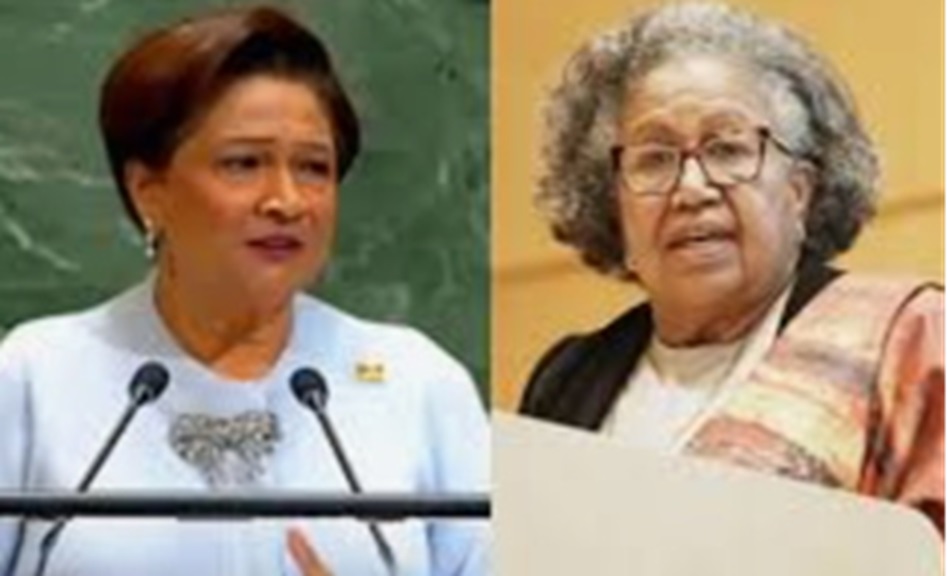
A deepening rift has emerged within the 15-member Caribbean Community (Caricom) over the controversial reappointment of Secretary-General Dr Carla Barnett, with Trinidad and Tobago’s Prime Minister Kamla Persad-Bissessar launching a fierce public campaign demanding full procedural transparency and threatening ongoing pushback against the regional bloc until her demands are met.
Persad-Bissessar has labeled the process that led to Barnett’s second five-year term as a “surreptitious and odious” affair that carries lasting consequences for the citizens of Trinidad and Tobago, the Caribbean nation that contributes 22% of Caricom’s total annual operating budget. In a public statement published to her official Facebook page, the prime minister reiterated her call for the regional integration body to open its books on the reappointment, stressing that her administration will offer no reprieve to Caricom or its secretariat until the matter is resolved in a fully transparent manner.
“This is not a routine administrative appointment. It shapes the trajectory of Trinidad and Tobago’s economy, national security, regional integration progress, and foreign policy over the next five years, which means it directly impacts the well-being of every one of my citizens,” Persad-Bissessar wrote. “I will pursue this issue mercilessly, relentlessly, and unapologetically in public until we get the transparency that we are owed.”
The controversy first came to a head at Caricom’s heads of government summit held last month in Basseterre, St Kitts and Nevis. Shortly after the meeting closed, Caricom chairman and St Kitts and Nevis Prime Minister Dr Terrance Drew announced in a short official statement that Barnett had secured the required majority of votes from regional leaders to earn reappointment.
But Trinidad and Tobago has pushed back hard against the outcome, asserting that the country was deliberately excluded from the closed-door deliberations that led to the vote. Port of Spain also confirms that two other member states, Antigua and Barbuda and The Bahamas, were similarly absent from the talks.
Speaking to Trinidad and Tobago’s parliament last month, the country’s Minister of Foreign and Caricom Affairs Sean Sobers stressed, “I state clearly for the official record: Trinidad and Tobago was never invited, by email, phone, or in person, to the meeting where this decision was taken.”
Persad-Bissessar, who departed the Basseterre summit before the heads of government retreat on neighboring Nevis where the vote was held, confirmed that Sobers sent an official letter to Drew on March 25 formally registering Trinidad and Tobago’s objection to Barnett’s reappointment.
The core of Trinidad and Tobago’s complaint centers on procedural violations of Caricom’s governing rules. Persad-Bissessar explained that the reappointment was never added to the provisional agenda for the 50th Regular Meeting of the Conference of Heads of Government, was never discussed during open plenary sessions, and was only addressed during the restricted retreat, from which official representatives of Trinidad and Tobago and other member states were barred.
“This process raises serious questions about a deliberate effort to circumvent established rules and push through Barnett’s reappointment through improper channels,” the prime minister said. She added that under Article 24 of the Revised Treaty of Chaguaramas, the Conference of Heads of Government must formally consider and approve all Secretary-General appointments, a requirement the current process failed to meet.
In pursuit of clarification, the Trinidad and Tobago government sent two additional official letters on March 31, 2026: one addressed to Drew, and a second directly to Barnett. The letters request granular details including when the reappointment was added to meeting agendas, what communications were sent to all member states, whether governments were notified of the outcome after the summit’s joint communiqué and closing press conference, and whether any draft decision was circulated confidentially after the retreat. The government also asked for an explanation for any secrecy surrounding the process, noting that preserving member states’ trust in Caricom’s procedural rules and collective decision-making system is critical to the bloc’s function.
On the same day, the Permanent Secretary at Trinidad and Tobago’s Ministry of Foreign and Caricom Affairs sent a separate formal request to Janice Miller, Chef-de-Cabinet in the Office of the Secretary-General, seeking clarification and supporting documentation related to the reappointment. That letter pointed out that past reappointments, including the 2016 selection process, fully followed established procedures, with all decisions properly recorded and reflecting the input of all heads of government. The Permanent Secretary emphasized that the 2026 process appears to deviate significantly from Caricom’s agreed rules of procedure.
As of the publication of Persad-Bissessar’s latest statement, the Trinidad and Tobago government has yet to receive any response to its requests. “The people of Trinidad and Tobago fund nearly a quarter of Caricom’s budget. They deserve transparency, accountability, and full respect for the rules all members agreed to follow,” Persad-Bissessar added.
Barnett first took office as Caricom’s eighth Secretary-General on August 15, 2021, after being unanimously appointed by regional leaders for her first term.