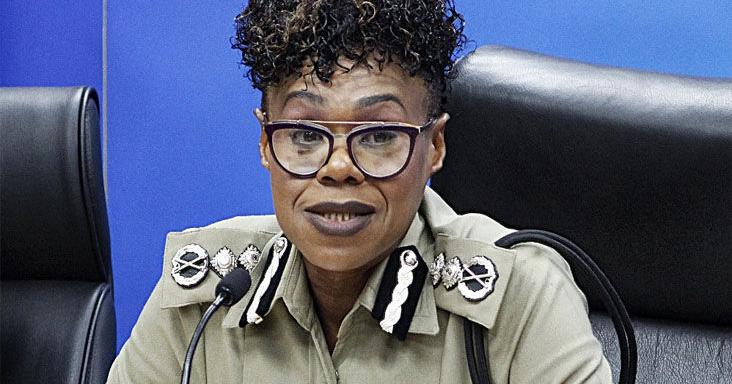
Trinidad and Tobago’s ongoing state of emergency (SoE), implemented to curb rising violent crime, has been marred by persistent gang-related violence, with 30 people murdered across the nation since the measure took effect last month. This official death toll was confirmed by Deputy Commissioner of Police (DCP) Suzette Martin, who spoke publicly following two fatal shootings that rocked the communities of San Juan and Valencia on Friday.
While investigations into the motives of the two most recent killings remain in early stages, Martin noted that a large portion of the homicides recorded during the SoE can be tied to local gang activity, with others linked to other forms of organized criminal enterprise. She emphasized that law enforcement remains deeply troubled by the persistence of murder even under emergency public safety measures, telling local outlet *Trinidad Express*, “It just goes to show how lawless our land can be at times.”
The 2026 state of emergency was formally approved on March 2 and came into force the following day, enacted in response to alarming crime rates recorded in the first two months of the year. As of Saturday evening, the total national homicide count for 2026 already stands at 92.
Police officials have acknowledged that emergency measures have yielded mixed results across different crime categories. During a media briefing held last month at the Port of Spain Police Administration Building, Police Service media ambassador Owie Russell shared early crime data comparing the first three weeks of the current SoE (March 3 to March 23) to the same period of the previous emergency declaration. The data showed significant declines in several major offences: reported sexual offences dropped from 54 to 13, reported kidnappings for ransom fell to just one case, residential break-ins decreased from 74 to 50, and overall robberies plummeted from 125 to 51.
However, Russell also confirmed a troubling uptick in home invasion incidents, noting that active investigations are ongoing into all unsolved cases.
The push for a new state of emergency came after crime statistics released in the Senate laid bare the severity of the nation’s public safety crisis before the measure was enacted. In the first two months of 2026, before the SoE was declared, more than 1,200 serious criminal offences were reported across the country, while law enforcement clearance (detection) rates remained stuck at stubbornly low levels. Homeland Security Minister Roger Alexander told the Senate this week that provisional police data recorded 725 serious offences in January, with an additional 479 reported in February.
The most recent violence unfolded in two separate incidents early Friday. In Valencia, 42-year-old Sherman Lambkin, widely known by the nickname “Gummy,” was gunned down inside a private residence after an armed gunman forced entry to the property. Police accounts confirm Lambkin was visiting a female acquaintance at her home around 2:45 a.m. when the attacker breached the front door and opened fire. The witness told investigators she saw Lambkin fall immediately after the first volley of shots, before the gunman approached the downed man and fired multiple additional fatal shots before fleeing the scene.
Multiple specialized law enforcement units, including the Eastern Division Task Force, Homicide Region II, local criminal investigation teams from Valencia and Sangre Grande, and the national Crime Scene Unit, responded to the call just after 3 a.m. Responding officers found Lambkin lying supine on the kitchen floor of the small concrete home, where he was pronounced dead at 5 a.m.
Hours earlier, in San Juan, 35-year-old Anand Joseph—also known as “Mamoo,” a resident of Laventille Road—was found shot to death inside a parked vehicle just a short distance from his home. Police preliminary investigations estimate Joseph was killed shortly after midnight on Friday. Both killings remain under active investigation.