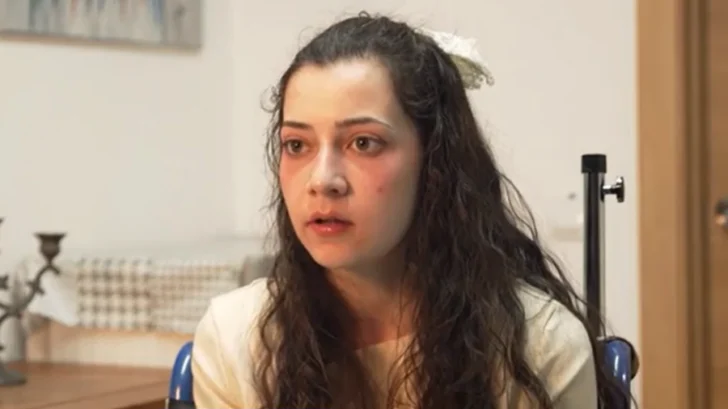
After a two-year high-profile legal fight that forced Spain to confront the deepest ethical and legal boundaries of its 2021 euthanasia legislation, 25-year-old Noelia Castillo Ramos is scheduled to undergo her approved euthanasia procedure this Thursday, bringing one of the most controversial test cases of the country’s right-to-die law to its final resolution.
Noelia’s journey to this moment is rooted in decades of unrelenting trauma and declining health. A survivor of repeated abuse throughout a difficult childhood, her life was upended irreversibly in 2022, when a suicide attempt following a traumatic gang rape left her permanently paralyzed from the fall and living with constant, unmanageable chronic pain. She first formally submitted her request for euthanasia when she was just 23 years old, and by April 2024, her application received unanimous approval from Catalonia’s regional Guarantee and Evaluation Commission, the body tasked with reviewing end-of-life requests under Spanish law.
The process, however, came to an abrupt halt when Noelia’s father, backed by an ultra-conservative Catholic advocacy group, launched a legal challenge opposing the procedure, citing unsubstantiated concerns about his daughter’s mental capacity to make the decision. What followed was a protracted legal battle that climbed through every tier of the Spanish judicial system: from regional courts to the Catalonia High Court of Justice, the national Supreme Court, the Constitutional Court, and ultimately the European Court of Human Rights. Every judicial body that reviewed the case ruled consistently in Noelia’s favor, upholding her legal right to access a dignified death under the 2021 law.
Throughout the entire drawn-out process, Noelia never wavered in her stated choice. She spoke publicly on multiple occasions, emphasizing that she could no longer endure the combination of unremitting physical pain and the lingering psychological trauma of her past abuse and assault. Repeated psychological evaluations confirmed that her emotional distress had only worsened as the legal battle dragged on, with the extended uncertainty amplifying her suffering.
Noelia’s case has become one of the most emblematic and widely debated examples of Spain’s euthanasia framework in practice, in large part because of her status as a young person living with disabling chronic pain and trauma, rather than a terminal illness. The dispute has reignited national and international conversations about core ethical questions: what does personal bodily autonomy really mean for end-of-life decision-making, what responsibility do public health and judicial systems have to honor a mentally competent person’s choice, and where should the line be drawn between family objection and individual right to a dignified death.
With all legal challenges now fully exhausted and every court having upheld Noelia’s request, the procedure is set to move forward this Thursday, closing a chapter that has tested the foundational principles of Spain’s landmark euthanasia legislation three years after it became law.