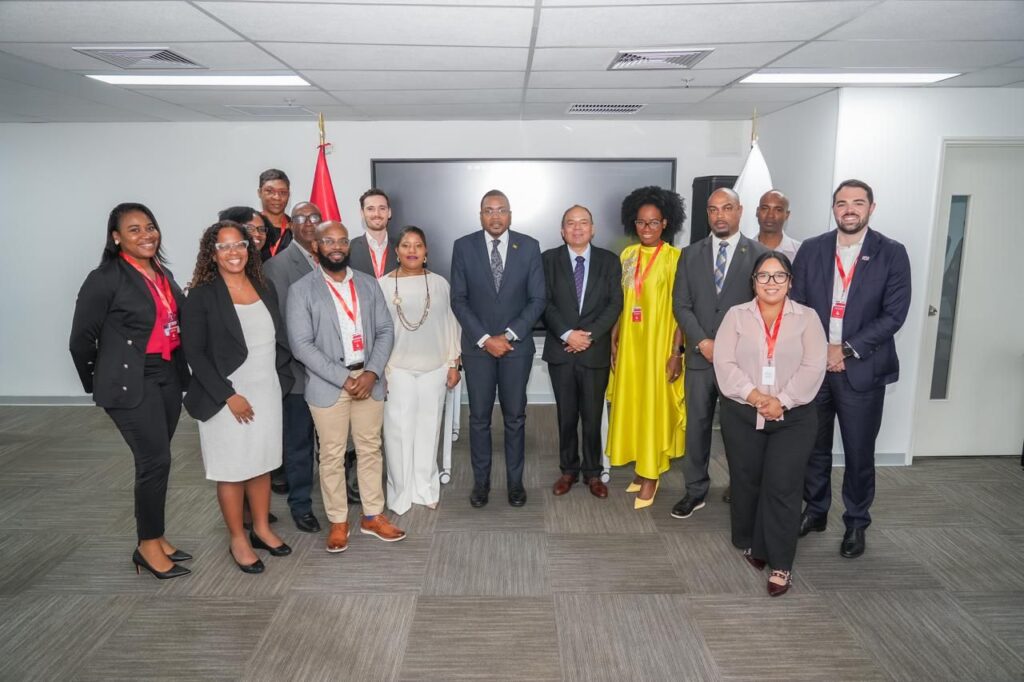
KINGSTON, Jamaica – In a targeted effort to strengthen Jamaica’s post-Hurricane Melissa reconstruction planning, Jamaica’s Minister of Works Robert Nesta Morgan has wrapped up a high-impact working visit to Peru, hosted to study the South American nation’s globally acclaimed model for large-scale post-disaster infrastructure recovery.
Back in 2025, Hurricane Melissa swept across Jamaica, leaving a trail of widespread destruction to the country’s built environment, pushing Jamaica’s government to search for proven, scalable strategies to guide its own recovery and long-term infrastructure development. The UK government stepped in to facilitate the knowledge-sharing mission, connecting Jamaican officials with Peru’s decades of experience in post-disaster rebuilding.
Peru’s own reconstruction journey began in the wake of the catastrophic 2017 El Niño Costero event, a climate-driven disaster that disrupted the lives of more than 1.5 million Peruvians and crippled key public infrastructure across the country. In the years following the crisis, Peruvian authorities built a specialized, centralized reconstruction body that eventually evolved into the National Infrastructure Authority (ANIN), a permanent agency that now oversees all major infrastructure projects across the nation.
During Morgan’s visit, UK partners organized a full schedule of technical briefings, collaborative workshops, and on-site visits to completed infrastructure projects for the Jamaican delegation. These engagements gave the team first-hand insight into how Peru’s model can be adapted to Jamaica’s unique post-disaster context.
In a reflection on the trip, Morgan emphasized that the visit drove home one core lesson: successful post-disaster reconstruction cannot be treated as a disconnected collection of small projects. Instead, it requires unified governance as a national-scale program, backed by robust institutional frameworks, transparent procurement systems, clear accountability structures, and an unwavering focus on long-term climate resilience.
The Jamaican government also highlighted the critical role of UK-Perrvian government partnership in making Peru’s success possible. UK technical and financial expertise accelerated the delivery of core public assets including schools, hospitals, community health centers, flood defense systems, and early climate warning infrastructure. Beyond physical construction, the partnership also supported Peru to overhaul its procurement processes, boost government transparency, and build long-term institutional capacity that endures today.
UK experts embedded directly with Peruvian technical teams to deliver complex projects on accelerated timelines, all while maintaining strict standards for construction quality, open competitive procurement, and climate-resilient design. Alicia Herbert, British High Commissioner to Jamaica, reaffirmed the UK’s ongoing commitment to Jamaica’s recovery effort.
“We are proud of the role the UK has played in Peru’s reconstruction and remain committed to supporting Jamaica as it transitions from recovery to resilient rebuilding following Hurricane Melissa,” Herbert said.
The Jamaican delegation’s itinerary included on-site visits to major completed projects in Lima, including a new school development and flood protection works at Huaycoloro gully. The team also held targeted discussions with technical partners on governance frameworks, procurement management, project controls, cross-stakeholder engagement, and long-term infrastructure planning.
Data presented during the visit illustrates the tangible impact of Peru’s national reconstruction program. To date, authorities have launched 153 individual projects across the country: 84 of these facilities are already completed and serving local communities, with another 28 currently in active construction. The portfolio spans 71 schools, five primary healthcare centers, four full hospitals, comprehensive flood protection networks, and climate early warning infrastructure, bringing improved safety and services to roughly 1.4 million Peruvians.
Morgan stressed that the visit reinforced a key takeaway: long-term institutional capacity building must go hand-in-hand with the construction of new physical infrastructure. “What stood out is that Peru did not simply rebuild what was lost. It focused on building back better, faster, and in a way that strengthened its institutions,” Morgan explained. “The transition to ANIN as a permanent delivery body is a powerful example of how reconstruction can leave a lasting legacy of improved state capacity.”
Looking ahead to Jamaica’s own recovery, Morgan outlined the key lessons the delegation will bring home: strengthening centralized program management, prioritizing high-impact projects early in the recovery process, integrating climate-resilient design into all new infrastructure, improving coordination across government agencies, centering community input in planning, and embedding long-term operations and maintenance requirements from the initial design phase.