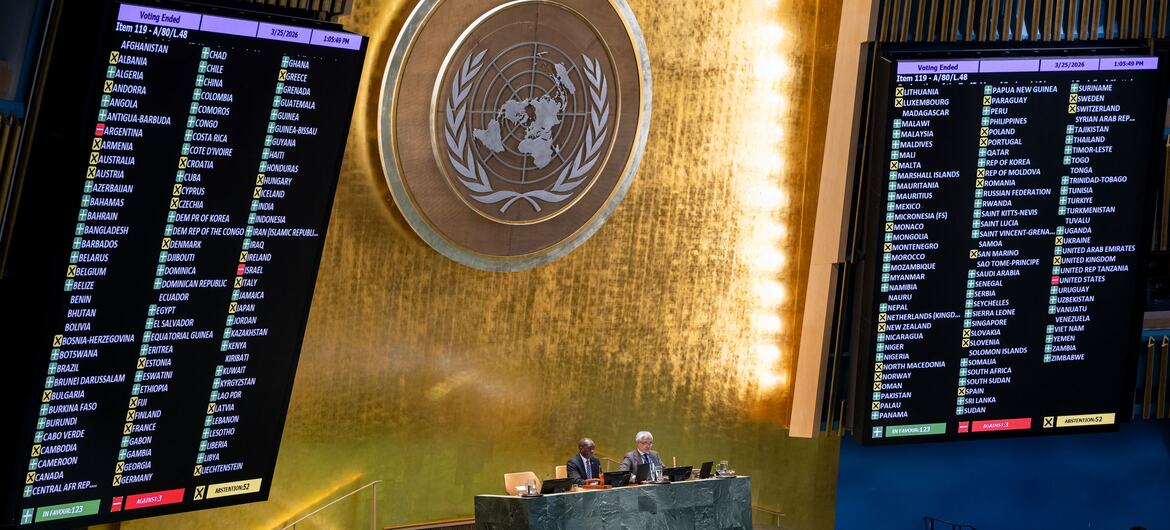
In a landmark decision at the United Nations General Assembly, 123 nations endorsed a historic resolution formally recognizing the transatlantic slave trade as the “gravest crime against humanity.” The measure, championed by Ghana, further urged member states to consider issuing formal apologies and contributing to a reparations fund addressing the enduring legacy of historical enslavement.
Prime Minister Philip J. Pierre of Saint Lucia, a vocal supporter, hailed the resolution as a necessary and timely acknowledgment of a painful historical chapter. He emphasized the importance of confronting this history, stating, “Some of us would prefer to forget. But… that’s part of our history… We should never forget that it happened.”
The vote revealed significant international divisions. The United States, Israel, and Argentina cast opposing votes, while 52 nations, including the United Kingdom and several European Union members, abstained. U.S. representative Ambassador Dan Negrea articulated a stance shared by several abstaining nations, asserting that the U.S. “does not recognise a legal right to reparations for historical wrongs that were not illegal under international law at the time they occurred.” This argument posits that contemporary governments and institutions cannot be held legally accountable for actions that occurred centuries prior.
Although General Assembly resolutions are not legally binding like Security Council mandates, they possess considerable symbolic and political influence, serving as a barometer of global consensus on critical moral and historical issues. The passage of this resolution amplifies the ongoing global discourse on historical justice, accountability, and the complex question of financial reparations for the descendants of enslaved peoples.