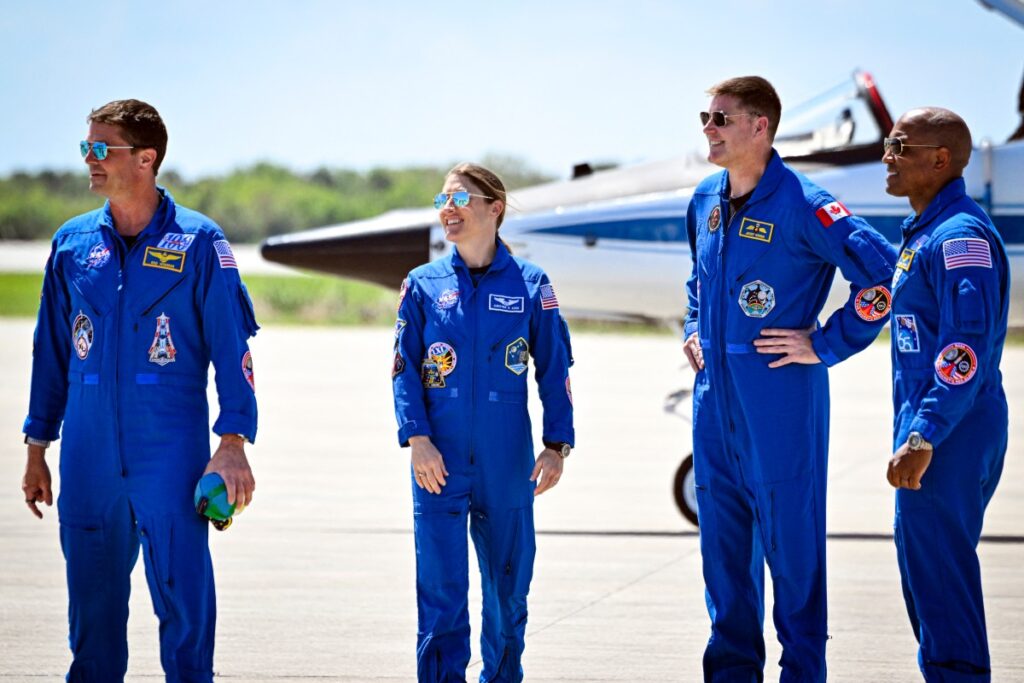
CAPE CANAVERAL, United States — NASA has initiated the final countdown sequence for its groundbreaking Artemis II mission, marking the United States’ first attempt to send astronauts to lunar vicinity since the Apollo program concluded over five decades ago. The two-day preparatory window began Monday at Kennedy Space Center in Florida, setting the stage for a potential Wednesday evening launch that would send a diverse four-person crew on an unprecedented journey around the Moon.
The mission’s primary launch window opens at 6:24 PM local time (2224 GMT) on Wednesday, April 1, with contingency opportunities available through April 6 should technical or weather conditions necessitate delay. NASA officials expressed strong confidence in both the spacecraft systems and crew readiness during pre-launch briefings.
‘We have reached a pivotal moment where vehicle, system, and crew are fully prepared,’ stated Amit Kshatriya, NASA’s associate administrator. ‘This flight represents the foundation of our broader lunar campaign, which includes establishing a permanent human presence on the Moon.’
The Artemis II crew—comprising NASA astronauts Reid Wiseman, Victor Glover, and Christina Koch, alongside Canadian Space Agency astronaut Jeremy Hansen—has entered pre-flight quarantine protocols. The astronauts were scheduled for a final family dinner at a Florida beach residence Monday evening before embarking on their historic journey.
This mission achieves multiple historic milestones: featuring the first woman, first person of color, and first non-American to participate in a lunar mission. The flight also serves as the inaugural crewed demonstration of NASA’s Space Launch System (SLS), the most powerful rocket ever developed, which stands ready at Launch Complex 39B.
Despite previous technical challenges that delayed the original February launch target, engineering teams reported all systems functioning optimally. Launch director Charlie Blackwell-Thompson emphasized: ‘We maintain a philosophy of launching only when hardware readiness meets our strict standards. Current indicators suggest we are in excellent condition for Wednesday’s attempt.’
Meteorological factors remain the primary variable, with NASA’s latest forecast indicating an 80% probability of favorable weather conditions. Mission controllers are monitoring cloud coverage patterns and surface wind speeds, while space weather teams track solar activity that could affect launch operations.
The successful completion of Artemis II will validate critical systems for NASA’s Artemis program, which aims to establish sustainable lunar exploration capabilities and ultimately facilitate human missions to Mars.