Cuba’s energy sector is navigating its most critical challenge in decades as the United States intensifies its six-decade economic embargo, creating unprecedented fuel shortages that have paralyzed power generation and forced nationwide energy rationing.
According to First Deputy Minister of Energy and Mines Argelio Jesús Abad Vigoa, the country has been unable to receive contracted fuel shipments for over three months due to what officials term an ‘energy blockade.’ This has resulted in approximately 1,400 megawatts of power generation capacity remaining idle—including 1,100 MW in distributed generation and 330 MW at Mariel and Moa facilities—primarily due to crude oil shortages.
The current energy mix relies heavily on domestic crude oil at thermoelectric plants, associated gas from oil wells, and renewable sources. This precarious combination has led to prolonged and disruptive power outages across the nation.
Despite these challenges, Cuba has achieved modest progress in domestic production. The Cuban Petroleum Union reversed its production decline in 2025, reaching its highest output in seven years. New wells have shown promising results, increasing crude oil and natural gas production capacity.
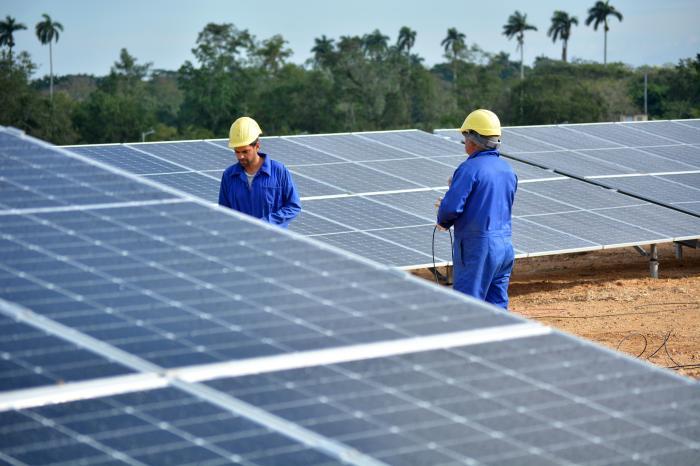
Significant investments in renewable energy include the completion of 52 solar photovoltaic parks providing over 1,000 MWp, generating up to 38% of daytime energy consumption. More than 10,000 solar systems have been installed for essential workers, with additional deployments for isolated communities and critical services.
The industrial sector is undergoing structural transformation toward financial self-sufficiency and energy autonomy. Minister of Industry Eloy Álvarez Martínez reported six approved self-financing schemes allowing business groups to retain foreign currency earnings for operational needs. The sector has strengthened its 27 foreign-capital enterprises and developed internal alliances that facilitate raw material procurement.
The water resources sector faces parallel challenges, with only 33% of the country’s 3,300 pumping stations utilizing solar or gravity-fed alternatives. National Institute of Water Resources President Antonio Rodríguez Rodríguez outlined plans to prioritize 480 critical stations serving large populations, while deploying electric vehicles and charging infrastructure to reduce fuel dependency.
Ongoing infrastructure projects include 29 kilometers of new water supply systems and 3 kilometers of sanitation infrastructure expected to benefit 189,000 residents, though implementation remains contingent on fuel availability.