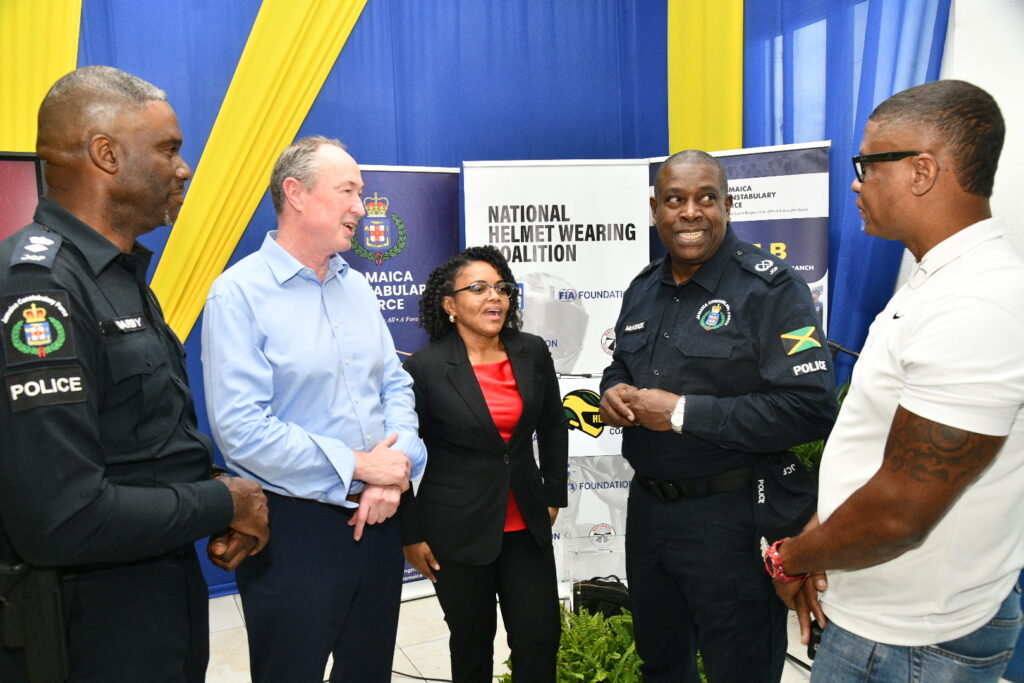
KINGSTON, Jamaica – Jamaican law enforcement authorities have announced an ambitious road safety initiative targeting a drastic 50 percent reduction in motorcycle-related fatalities by 2026. This targeted effort forms a critical component of a broader national objective to bring the country’s annual road fatalities below 300.
Senior Superintendent of Police Lloyd Darby, the Commanding Officer for the Public Safety and Traffic Enforcement Branch (PSTEB), outlined the three-pronged strategy, which hinges on rigorous enforcement, comprehensive public education campaigns, and specialized training, all facilitated through strategic partnerships. A cornerstone of this plan is a newly adopted zero-tolerance policy toward all traffic violations committed by motorcycle operators.
“This integrated strategy of zero-tolerance enforcement for all motorcycle offences, combined with proactive public education, was formally launched in February,” SSP Darby stated. He provided concrete data to underscore the initiative’s initial impact, revealing that “786 motorcycles have been impounded to date, a significant increase from the 336 seized during the same period last year.”
The senior officer made these remarks during a Helmet Enforcement Training session held at the JCF Area Four Headquarters (Harman Barracks) on March 25. He emphasized that collaborative efforts and enhanced training are indispensable for effectively altering road-user behavior and improving enforcement outcomes.
“It is a recognized fact that the Jamaica Constabulary Force cannot unilaterally manage traffic and reduce crash fatalities,” Darby pointed out, highlighting the necessity of multi-stakeholder engagement.
The current training program, orchestrated by the JN Foundation under the auspices of the National Helmet Wearing Coalition, is specifically designed for PSTEB personnel. Running from March 25 to 27, the curriculum blends theoretical classroom instruction with hands-on practical exercises. This training is planned to be implemented in multiple phases, with the ultimate goal of being permanently incorporated into the institutional training framework of the JCF.