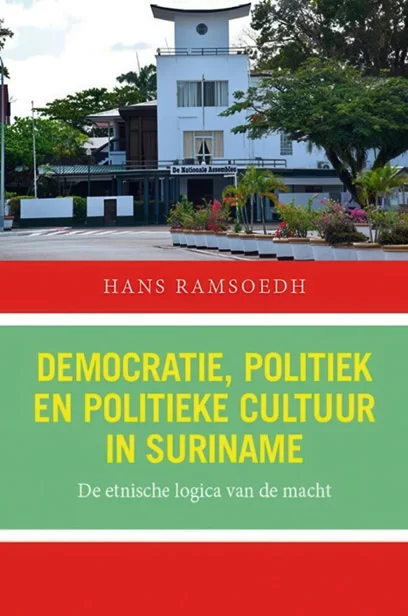
A groundbreaking historical analysis has revealed disturbing details of institutional racism within Dutch colonial policy during World War II, drawing powerful connections to contemporary democratic challenges worldwide. The revelations come from Dr. Hans Ramsoedh’s newly published work “Democracy, Politics and Political Culture in Suriname – The Ethnic Logic of Power,” which examines Suriname’s complex democratic journey from 1866 to the present.
The research documents how Dutch authorities in London systematically rejected military reinforcement requests from Surinamese Governor Kielstra, despite growing security concerns. Shockingly, the Dutch cabinet dismissed the necessity of military conscription for Surinamese men based on explicit racial prejudice. Government officials expressed that ‘little negroes’ would fail to impress Americans with their racial segregation policies, consequently maintaining Suriname’s troop composition as ‘white as possible.’
In 1941, when approximately 500 Surinamese volunteers enlisted for the Princess Irene Brigade in Canada, all but a few dozen were rejected by the Dutch government-in-exile. Prime Minister Gerbrandy allegedly feared their presence would cause racial tensions among Dutch conscripts from South Africa—prioritizing white sensibilities over liberating the Netherlands with colored troops.
Dr. Ramsoedh’s comprehensive 317-page study, complete with extensive notes and references, provides a chronological examination of Suriname’s democratic development through distinct historical periods: colonial guardianship (1866-1945), post-colonial awakening (1945-1975), failing democracy after independence (1975-1987), and democratic transition with ongoing fragility (1987-present).
The work gains particular relevance through its exploration of endemic problems including ethnic fragmentation, clientelism, corruption, and organized crime that continue to undermine democratic institutions. The author emphasizes democracy as a ‘way of life’ in the spirit of philosopher John Dewey, highlighting citizenship education’s crucial role in cultivating democratic attitudes and societal engagement.
Notably, the study examines how poverty, social inequality, and criminal capital influence political parties, while addressing the psychological impact of chronic stress on ethical behavior. The author argues that without discretionary time for recovery and reflection—impossible when working multiple jobs merely to survive—self-control diminishes and indifference becomes the human condition.
The work concludes that emotional self-regulation and humanization of society are essential for integrity under pressure, ultimately reminding readers that it is people who shape democracy, politics, and political culture.