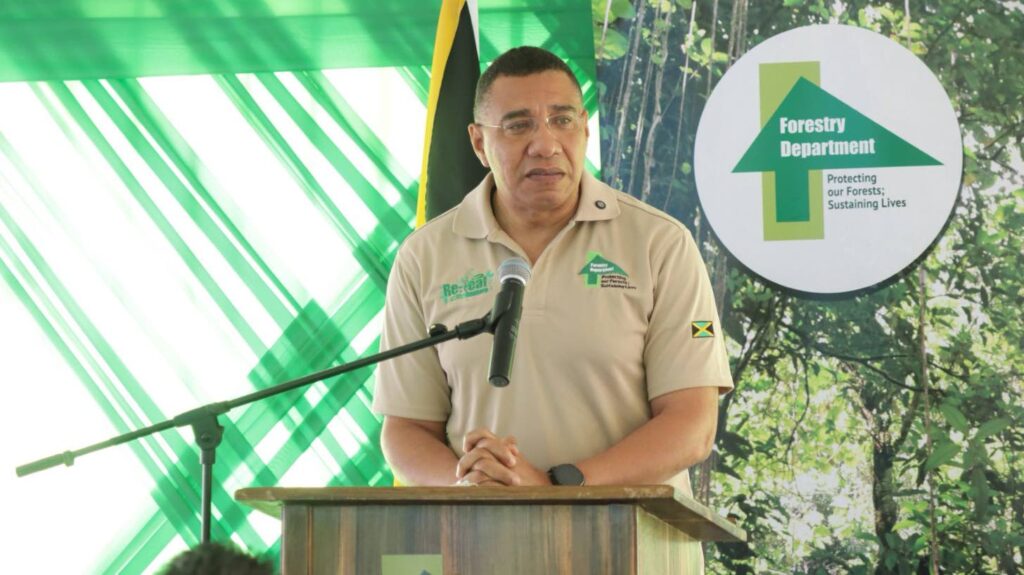
Jamaican Prime Minister Andrew Holness has issued a compelling nationwide appeal for volunteers to participate in an extensive reforestation campaign, responding to the severe environmental damage caused by Hurricane Melissa in October. The urgent call to action came during Wednesday’s official launch of the Reforestation, Ecological Enhancement and Landscape Framework (RE-LEAF) program at Lowe River Primary and Infant School in Trelawny.
The ambitious first phase of this ecological restoration project, scheduled from January to June 2026, targets the planting of 300,000 seedlings with a strategic inclusion of 30,000 fruit trees to simultaneously address food security concerns. Minister of Water, Environment, and Climate Change Matthew Samuda reported that over 2,000 volunteers have already registered through the dedicated portal established on the Forestry Department’s website.
Holness emphasized the critical timeline for implementation, stating, “We want to do it very quickly,” while announcing parallel infrastructure developments including new nursery facilities in western Jamaica to support the massive seedling requirement. The prime minister specifically encouraged citizens to plant fruit trees alongside ornamental varieties, highlighting the government’s strategic approach to ecological diversity.
The initiative has been designed with scientific input from forestry experts who discovered that areas with monoculture vegetation suffered disproportionately greater damage during the hurricane compared to zones with diverse tree populations. This finding has directly influenced the program’s emphasis on introducing varied species in previously uniform planting areas.
Minister Samuda underscored the necessity of collective participation, noting that achieving the 300,000-tree target will require engagement from churches, service clubs, and educational institutions across Jamaica. The launch ceremony itself began symbolically with the planting of 1,000 seedlings, representing the initial step toward the larger goal.
Governor General Sir Patrick Allen praised the comprehensive nature of the RE-LEAF program, describing it as “a truly holistic approach” that connects environmental restoration with multiple benefits including enhanced food security, improved public health, social development, biodiversity conservation, and disaster risk reduction.
Prime Minister Holness further elaborated that the restoration efforts would extend beyond traditional forests to include mangrove ecosystems, emphasizing that national resilience requires decentralized responsibility. “Resilience is not just a feature of the Government,” he asserted. “Every institution in the society and every individual must be resilient.”