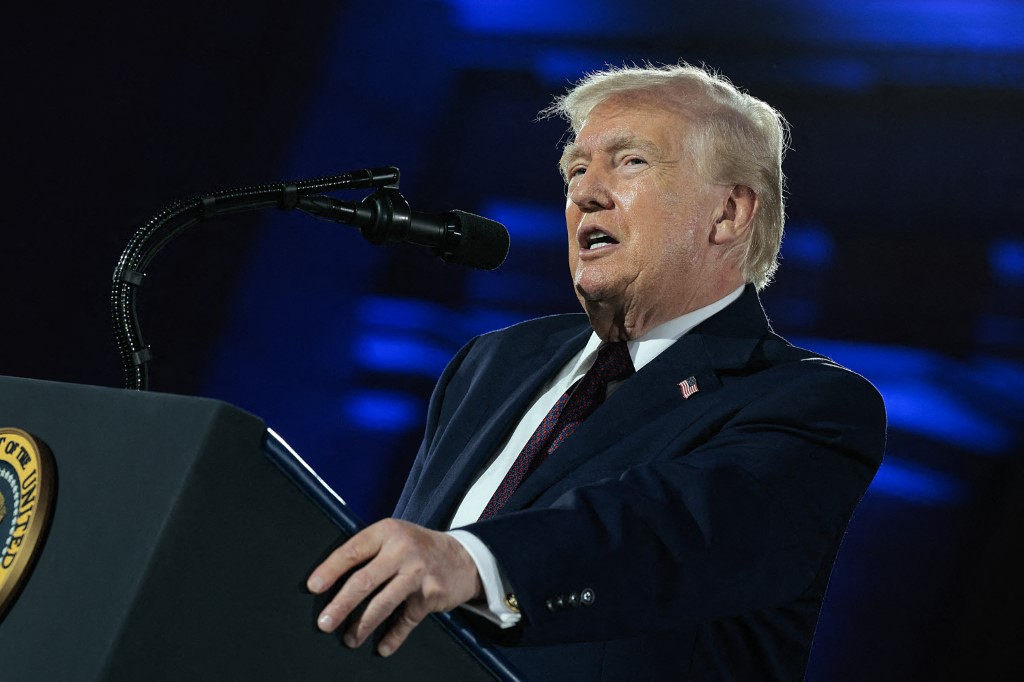
WASHINGTON, United States – President Donald Trump made striking claims at a Republican congressional dinner Wednesday, asserting that Iranian officials are secretly participating in peace negotiations despite their public denials. The President suggested Tehran’s contradictory statements stem from negotiators’ fears of retaliation from both their own government and potential U.S. action.
“They are negotiating, by the way, and they want to make a deal so badly. But they’re afraid to say it,” Trump stated, “because they figure they’ll be killed by their own people. They’re also afraid they’ll be killed by us.”
These comments directly contradicted Iranian Foreign Minister Abbas Araghchi’s recent declaration that “we do not intend to negotiate.” Trump maintained his position that Iran is being “decimated” in the ongoing conflict, now entering its fourth week, despite Tehran maintaining control over the strategically vital Strait of Hormuz oil route.
The White House reinforced Trump’s aggressive stance, with Press Secretary Karoline Leavitt warning that the President would “unleash hell” if Iran fails to acknowledge military defeat. “President Trump does not bluff and he is prepared to unleash hell. Iran should not miscalculate again,” Leavitt told reporters.
When questioned about negotiation status, Leavitt confirmed that “talks continue” and described them as “productive,” though she declined to identify current U.S. interlocutors following the assassination of Supreme Leader Ali Khamenei. Reports suggest Mohammad Bagher Ghalibaf, Iran’s parliamentary speaker, has emerged as a key figure in discussions.
The administration maintained its four to six-week timeline for military operations, with Trump postponing his scheduled visit to China until mid-May to manage the ongoing conflict. The White House also declined to confirm reports of planned high-level talks between U.S. officials and Iranian representatives in Pakistan, which has positioned itself as a mediation hub.
Amid escalating tensions, the U.S. continues military buildup in the Gulf region, deploying additional airborne troops and marines amid speculation of potential ground operations targeting Iranian oil assets or securing the Strait of Hormuz.