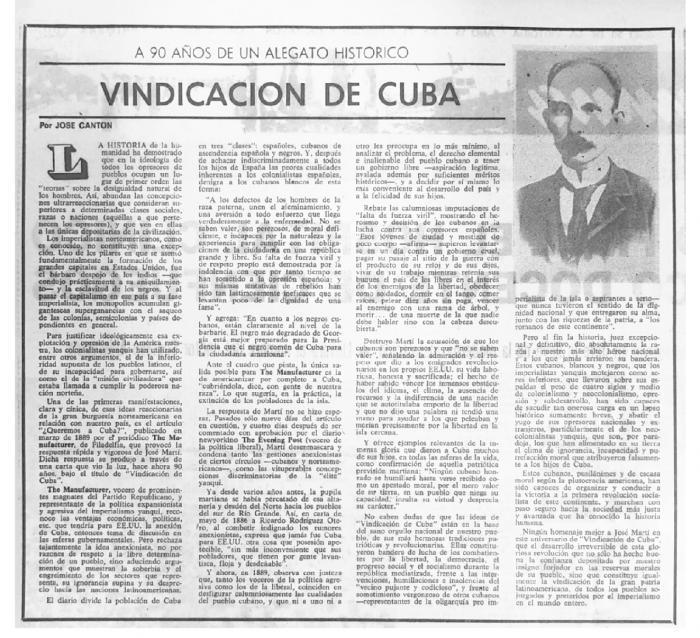
A seminal historical analysis revisits José Martí’s powerful 1889 rebuttal to U.S. expansionist rhetoric, revealing enduring patterns of imperial ideology. The original article, published in Philadelphia’s The Manufacturer, advocated against Cuban annexation not from principled opposition but through racist characterization of Cubans as “effeminate,” “lazy,” and inherently incapable of self-governance.
Martí’s response, titled ‘In Defense of Cuba,’ systematically dismantled these prejudicial claims while highlighting the revolutionary resilience of Cuban people against Spanish oppression. The Manufacturer’s proposal involved effectively replacing Cuba’s population with Americans to achieve ‘complete Americanization’—a genocidal implication Martí confronted with documented evidence of Cuban valor and intellectual achievement.
This historical exchange exemplifies how imperial powers historically manufactured racial and cultural hierarchies to justify domination. The article draws direct connections between 19th-century expansionist rhetoric and contemporary anti-imperial struggles, positioning Martí’s defense as foundational to Cuban national identity and revolutionary consciousness.
The analysis concludes that Cuba’s socialist revolution represents the ultimate vindication of Martí’s faith in his people’s moral and revolutionary capabilities—a living refutation of centuries-old imperial prejudices that continues to inspire anti-colonial movements globally.