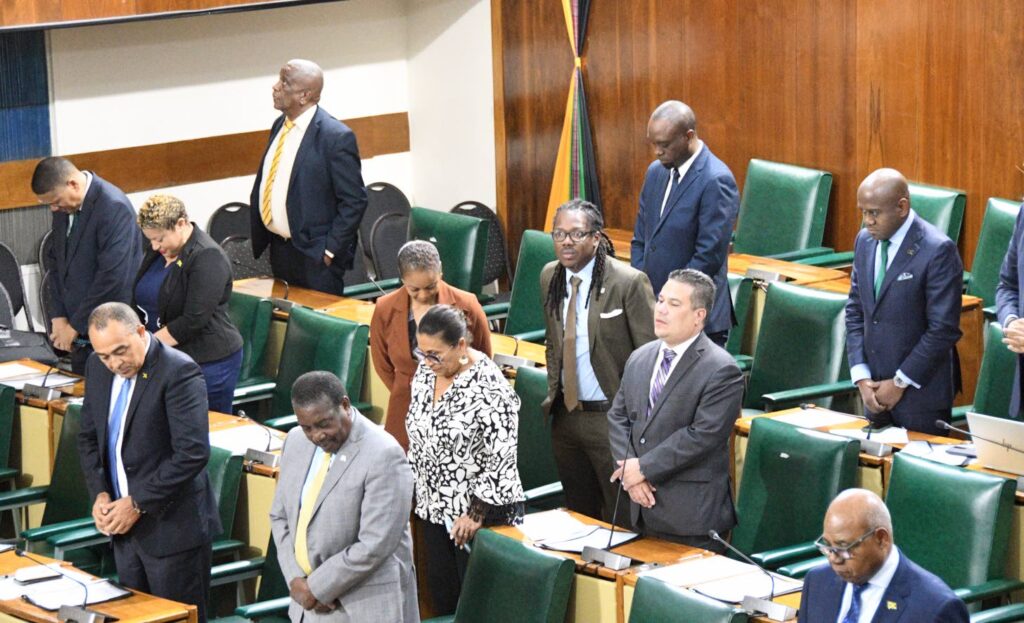
Jamaican Finance Minister Fayval Williams has issued a comprehensive clarification regarding the government’s proposed digital services tax, explicitly exempting online purchases of physical goods from the new revenue measures. The announcement came during the closing of the 2026/27 Budget Debate in the House of Representatives, addressing mounting concerns about the policy’s potential impact on consumers and businesses.
Williams presented a detailed taxonomy of digital trade, categorizing it into three distinct segments: digitally ordered and digitally delivered services, digitally ordered but physically delivered goods, and physically ordered but digitally delivered services. The minister emphasized that only the first category—services both supplied and consumed digitally across borders—would be subject to the proposed taxation framework.
“Goods entering Jamaica through our ports remain subject to existing taxes and duties,” Williams stated unequivocally. “Digitally ordered and physically delivered trade was not included in our revenue measures.”
The clarification comes amid sustained criticism from Opposition finance spokesman Julian Robinson, who argued the digital tax appeared contradictory to previous government efforts to reduce online shopping costs through increased de minimis thresholds.
Williams acknowledged significant policy gaps in the current system, revealing how consumers and importers have exploited the increased de minimis threshold—raised from US$50 to US$100—by systematically splitting orders to avoid taxation. This practice, she noted, has resulted in substantial revenue leakage and created an uneven competitive landscape for domestic retailers who face fully taxed inventory.
The minister positioned the digital services tax as part of a broader modernization effort for Jamaica’s tax framework, designed to address the rapid growth of digital economic activity that has outpaced existing tax regulations. Williams emphasized that the measure aims not to restrict digital access but to ensure equitable treatment between physical and digital economic activities as consumption patterns evolve.
With services constituting a substantial portion of Jamaica’s GDP and digital channels increasingly dominating economic activity, the government is simultaneously strengthening its capacity to measure and interpret digital economic developments to ensure future policies remain “fair, balanced, and grounded in accurate information.”