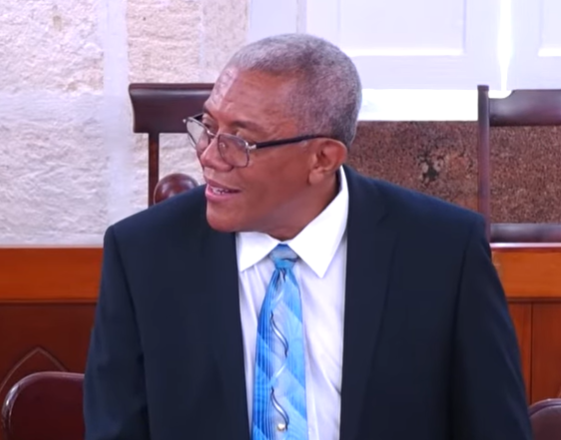
Barbados’s public finance management system contains profound structural flaws that require immediate overhaul, according to Independent Senator Andrew Niles. His urgent warning follows revelations that the final expenditure for CARIFESTA XV skyrocketed to $31.7 million—a staggering 800% increase from the originally requested $4 million in the previous fiscal year.
During Monday’s Senate debate on the Appropriations Bill, Senator Niles introduced the critical distinction between ‘the acts’ (initial budget requests) and ‘the grant’ (final authorized amounts), highlighting a persistent and concerning gap between projected and actual spending. The current fiscal year demonstrates this problem clearly: while the initial budget was set at $5.1 billion, it has since been revised upward to $5.89 billion, creating a $710 million discrepancy. Supplemental resolutions accounted for $562 million of this gap, with technical revisions like depreciation adjustments making up the remaining $148 million.
Senator Niles employed artificial intelligence to analyze the massive 800-page budget document, with the technology summarizing the data in under six minutes. This analysis identified 93 line items across 17 ministries requiring significant adjustments. The senator, drawing on his engineering background, categorized the budget shortfalls into five distinct structural problems:
1. Deliberate Compression: Known costs are systematically understated to meet fiscal targets
2. Structural Deficits: Institutions like the Transport Board operate with permanent costs exceeding revenue
3. Emergency Shocks: Unforeseen events like Hurricane Beryl, which incurred $17.5 million in costs
4. Informal Gaps: Volatile exchange rates that inflate overseas mission expenses
5. Governance Failure: Breakdowns in oversight that leave the state financially exposed
Senator Niles specifically highlighted the Queen Elizabeth Hospital (QEH) as a microcosm of the broader problem, describing it as a massive entity that ‘dictates the pace of this country.’ He characterized ministries as businesses that become unworkable when essential funding components are removed from the equation.
Looking forward, the senator expressed serious concern about projected revenue declines following temporary windfalls. ‘When revenue falls to $3.8 billion as projected, the compression pressure returns, the gap cycle restarts, and we will revert to the scenario we’ve seen in recent years,’ he warned.
The senator concluded with a call for fundamental reform in how the government handles financial shortfalls, urging improved estimation mechanisms to create more collaborative and understandable budget conversations rather than relying on supplementary approvals for already-committed expenditures.