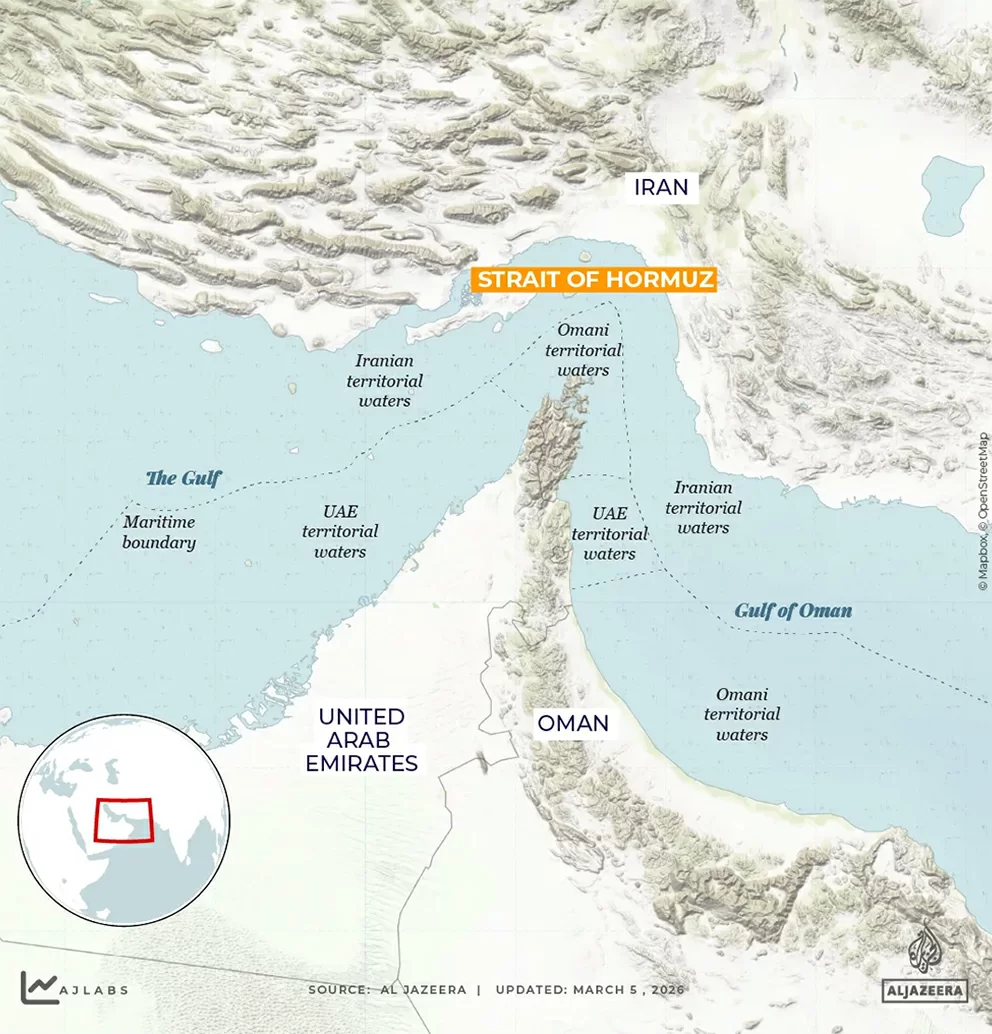
In a dramatic escalation of Middle East tensions, former U.S. President Donald Trump has ordered a five-day pause in planned attacks on Iran’s energy infrastructure, according to his statements on Monday. This development follows Trump’s 48-hour ultimatum issued Sunday demanding Iran reopen the Strait of Hormuz—a critical global oil transit route—or face targeted strikes on Iranian power facilities.
Trump claimed on Truth Social that Washington and Tehran had engaged in “very good and productive talks” regarding a “complete and total resolution of our hostilities in the Middle East,” adding that “this time Iran is serious; they want to settle. They want peace.” These assertions were immediately contradicted by Iranian officials, with the Tasnim news agency reporting no negotiations were occurring and Parliament Speaker Mohammad Bagher Ghalibaf dismissing the claims as “fake news” designed to manipulate financial markets.
The confrontation stems from Iran’s March 2nd announcement closing the Strait of Hormuz, through which 20% of global oil and gas passes, contributing to oil prices surpassing $100 per barrel. Trump’s Saturday threat specified that if Iran didn’t fully reopen the strait within 48 hours, the U.S. would “ATTACK AND DESTROY their various ELECTRIC POWER PLANTS, STARTING WITH THE LARGEST.” Potential targets include Iran’s Damavand plant near Tehran (2,900 MW capacity), Kerman plant (1,910 MW), and Ramin plant (1,890 MW).
Iran’s Islamic Revolutionary Guard Corps (IRGC) responded with counter-threats, vowing to target Israeli power plants and facilities supporting U.S. military bases in the region. The IRGC stated the strait would remain closed “until our destroyed power plants are rebuilt,” while Iranian officials clarified the passage remains open to all except “ships belonging to our enemies.”
The situation has triggered regional energy disruptions, with QatarEnergy halting LNG production after attacks on Ras Laffan and Mesaieed facilities, and Saudi Arabia suspending operations at its Ras Tanura refinery following fires allegedly caused by intercepted Iranian drones. Iranian officials denied involvement in these incidents.
Iran has expanded its potential retaliation targets to include financial entities supporting U.S. military activities, specifically mentioning U.S. Treasury bond holders. Companies like Berkshire Hathaway ($360 billion in holdings), Tether ($100 billion), and Circle—all with regional investments—could potentially be affected. The IRGC-linked Tasnim agency also listed technology firms including Google, Microsoft, Palantir, IBM, Nvidia, and Oracle as “new targets for Iran” due to their Israeli connections and military applications.
Critical water desalination infrastructure has already been impacted, with both Iran and Bahrain reporting attacks on facilities. This is particularly significant for Gulf states which rely on desalination for 50-100% of their water needs due to extreme water scarcity.