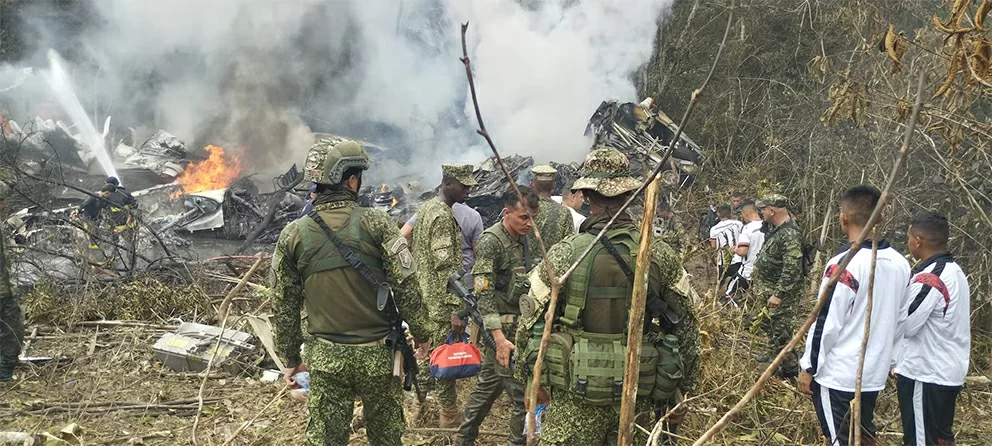
A devastating aviation tragedy struck Colombia’s southern Amazon region on Monday when a Colombian Air Force Hercules C-130 transport aircraft crashed shortly after takeoff, resulting in at least 34 confirmed fatalities. The aircraft, carrying military personnel, went down in Puerto Leguizamo, a remote municipality in the Putumayo province that borders both Peru and Ecuador.
According to Defense Minister Pedro Sánchez, the ill-fated aircraft experienced catastrophic failure merely 1.5 kilometers from its departure point. The crash triggered explosions aboard the aircraft due to ignited ammunition, complicating rescue efforts. Sánchez confirmed through official channels that preliminary investigations ruled out any ‘attack by illegal actors’ and indicated the aircraft had been airworthy with a qualified crew prior to departure.
Initial reports indicated 125 passengers aboard, but the Air Force later clarified the actual manifest listed 121 individuals—110 soldiers and 11 crew members—who were being transported to another location within Putumayo province. Local authorities, including Putumayo Governor Jhon Gabriel Molina, reported that identification processes remained ongoing for 21 victims.
The crashed Hercules C-130, manufactured by Lockheed Martin, represents part of Colombia’s military fleet that has undergone modernization in recent years. Colombia initially incorporated Hercules aircraft into its military operations in the late 1960s and has since updated older models with newer variants imported from the United States.
This incident marks the second major Hercules C-130 catastrophe in South America within months. In February, a Bolivian Air Force counterpart crashed in El Alto, narrowly avoiding residential structures while claiming over 20 lives and injuring 30 others. The recurrence of such incidents has raised questions about the operational safety and maintenance protocols of military transport aircraft across the region.