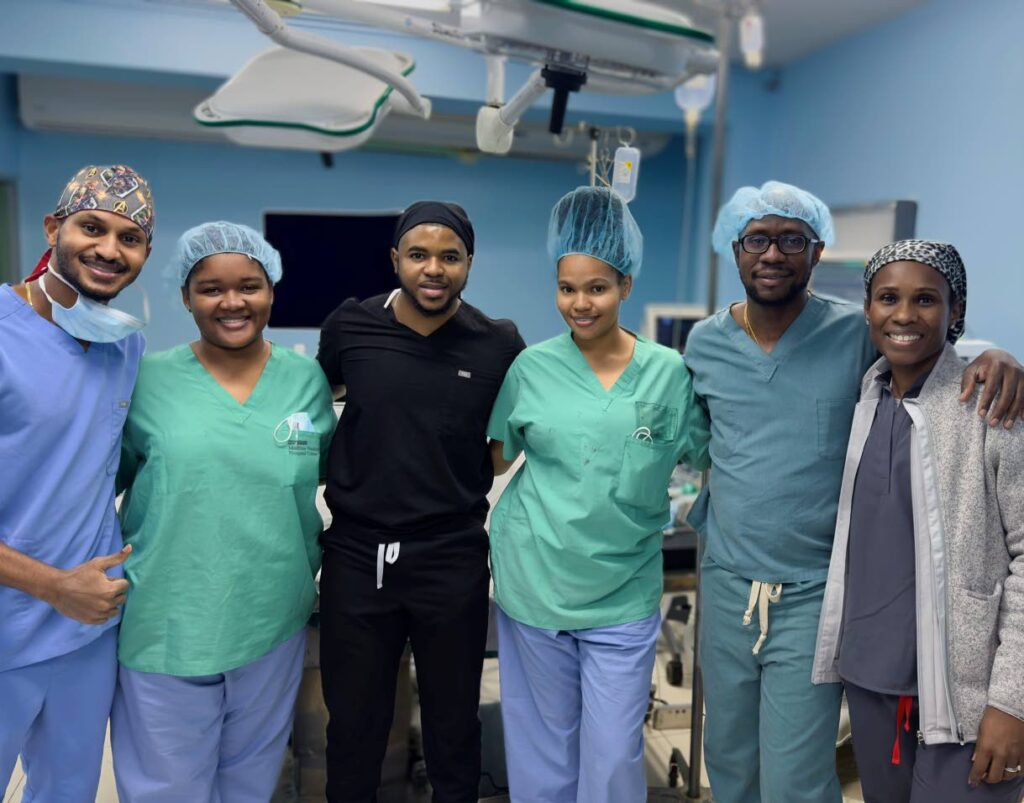
The landscape of global surgery is experiencing a profound transformation as minimally invasive techniques redefine patient outcomes. At the forefront of this medical evolution in the Caribbean, Jamaica’s Medical Associates Hospital has achieved a groundbreaking milestone by successfully performing its first laparoscopic colectomy—a complex colon procedure utilizing advanced keyhole surgical methods.
Under the leadership of Dr. O’Rane Thomas, a pioneering figure in minimally invasive surgery, the medical team executed this highly technical operation on a patient suffering from severe diverticulitis. The condition had caused significant inflammation, abscess formation, and abnormal adhesion between the colon and bladder, presenting substantial surgical challenges.
The procedure employed state-of-the-art technology including a newly installed laparoscopic tower that provided enhanced visual clarity and precision. Specialized instruments such as ultrasonic energy devices and advanced stapling tools enabled the surgeons to meticulously dissect tissue and reconnect the bowel through minimal abdominal incisions rather than the traditional large opening.
This surgical approach yielded remarkable benefits: the patient avoided both a temporary colostomy bag and additional follow-up surgeries that would have been necessary with conventional methods. Discharge occurred just four days post-operation—a fraction of typical recovery periods for traditional open colon surgery.
David Walcott, Managing Director of Medical Associates Hospital, emphasized that this achievement represents more than technical prowess: ‘This aligns with our broader hospital modernization and demonstrates that our transformation is fundamentally clinical, not merely aesthetic. It positions us as leaders in minimally invasive surgery while underscoring our commitment to world-class patient care.’
Dr. Thomas highlighted the broader implications for regional healthcare: ‘Investments in surgical innovation and modern equipment are crucial for Caribbean medical advancement. Such capabilities ensure patients can access complex procedures locally without overseas travel.’
The successful operation signals a paradigm shift in surgical care across Jamaica, where minimally invasive techniques are reducing recovery times, minimizing complications, and enabling faster returns to normal life—fundamentally improving the patient experience for major operations.