In the midst of global uncertainty, an unexpected friendship bridges cultural divides through the power of poetry. Indra Toelsie reveals how meaningful exchanges with Mahdi, an Afghan friend, have created a profound dialogue beyond words through shared verses of Persian literature.
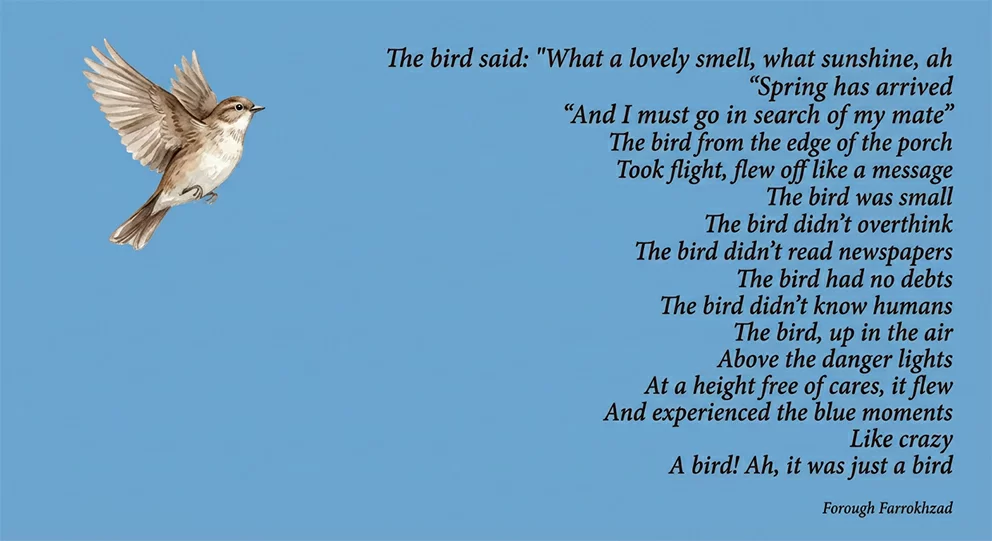
Their connection transcends geographical boundaries, with Mahdi recently sharing a poignant poem by renowned Iranian poet Forough Farrokhzad in response to Toelsie’s contemplation about ‘the spring that never fades.’ The selection serves as a powerful metaphor for resilience, depicting a small bird that instinctively takes flight to find its partner upon sensing spring’s arrival—unburdened by human concerns, debts, or news cycles, soaring above danger into pure, carefree freedom.
This avian imagery becomes a mirror for human experience, prompting reflection on how modern life entraps us in endless streams of information, worries, and obligations. Remarkably, it is Mahdi—living in a country where conflict and instability define daily existence—who reminds Toelsie of life’s simplest yet most powerful truth: the freedom of the human spirit and the confidence that spring inevitably finds its way, even through the harshest circumstances.
Their cultural exchange deepened when Mahdi introduced Toelsie to Persian poetry’s emotional resonance during a bus ride in Beijing. Sharing headphones, they listened together to a Persian poem set to music. Though Toelsie understood no words, the emotional transmission was complete—tears welling as the melody communicated universal human experiences beyond linguistic barriers, exemplifying how music and poetry form an international language that needs no translation.
The essay acknowledges those periods when spring feels perpetually distant, when adversity and unrest create webs of fear and doubt. Yet the image of the fearless bird continues to provide courage—a reminder to release anxieties, trust innate strengths, and rise above daily tumult.
Mahdi’s poetic selection builds bridges between their disparate worlds, connecting his struggle with Toelsie’s search, his hope with her longing. The message remains clear: however challenging the circumstances, however distant spring may appear, the human soul can maintain its freedom. Spring never truly retreats as long as we maintain the courage to fly.
Ultimately, Farrokhzad’s poem extends an invitation to everyone: become your own bird. Live with confidence and simplicity, refuse paralysis over the unchangeable, and seek the spring residing within every heart—allowing it to bloom despite external challenges. Mahdi’s hopeful message resonates universally: as long as we continue to fly and maintain hope, spring will never fade.