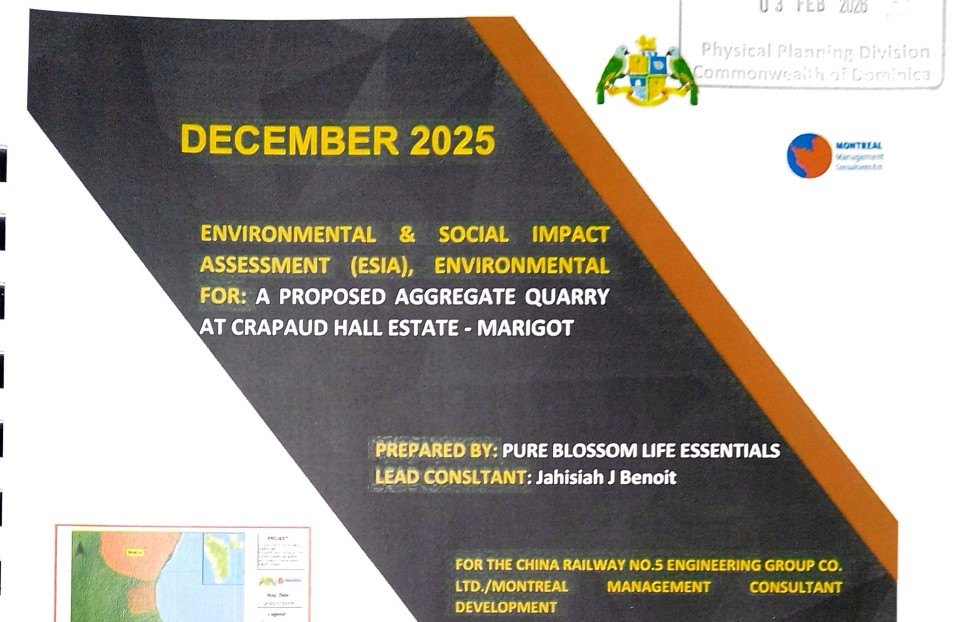
Kalinago Chief Annette Sanford has formally refuted assertions that her Council participated in consultations for the Environmental and Social Impact Assessment (ESIA) concerning the proposed Deux Branches quarry. This development project is intrinsically linked to Dominica’s ongoing international airport initiative. Through an official statement disseminated via her Facebook platform, Sanford highlighted escalating apprehensions regarding governmental transparency and community involvement in pivotal decision-making processes.
Sanford clarified that while the Kalinago Council was nominally identified as a stakeholder in the June 2025 ESIA documentation, no substantive consultations were ever conducted. This position was corroborated through discussions with former Chief Lorenzo Sanford, who confirmed that no deliberations regarding quarry operations occurred during his administration either. The extent of governmental engagement with the current Council comprised a solitary email from the Physical Planning Division dated March 3, 2026, and a meeting with Parliamentary Representatives on January 22, 2026—both of which yielded no meaningful dialogue or substantive outcomes.
The ESIA documentation has emerged as a focal point of contention within the community. The activist organization Save Deux Branches spearheaded a months-long campaign demanding public accessibility to these critical documents. Their efforts were necessitated by the government’s initial provision of merely three physical copies in Roseau, accompanied by severely restricted viewing hours. Notably, no copies were allocated to the Kalinago Territory despite the quarry’s geographical proximity and its potential adverse effects on the indigenous community. Consequently, activists undertook independent scanning and distribution of the documents to ensure broader public access.
Substantive criticisms of the ESIA include discrepancies between different report versions, inconsistencies in geographical mapping that erroneously incorporate areas within the Northern Forest Reserve, and the conspicuous absence of accredited experts or comprehensive scientific evaluations. Detractors further note the report’s failure to acknowledge international treaties safeguarding indigenous rights, particularly the Escazú Agreement and ILO Convention 169. Additionally, the assessment neglects to adequately incorporate principles of free, prior, and informed consent—a fundamental requirement for indigenous communities.
Chief Sanford expressed gratitude to community members who facilitated the delivery of an ESIA copy to the Kalinago Council office, enabling resident access between 9 a.m. and 4 p.m. on weekdays. She emphasized that despite repeated communications directed to various ministries and governmental leaders, the Council remained systematically excluded from meaningful participatory dialogue.
This dispute underscores pervasive issues of transparency and accountability within Dominica’s development paradigm. For the Kalinago Territory, the controversy represents a critical test case regarding the equitable balance between national infrastructure ambitions and the imperative of respecting indigenous rights. Community organizations are urging citizens to thoroughly review the ESIA and submit formal feedback to the Physical Planning Division prior to the March 30, 2026 deadline, framing this process as a referendum on environmental stewardship and indigenous inclusion in national development strategies.