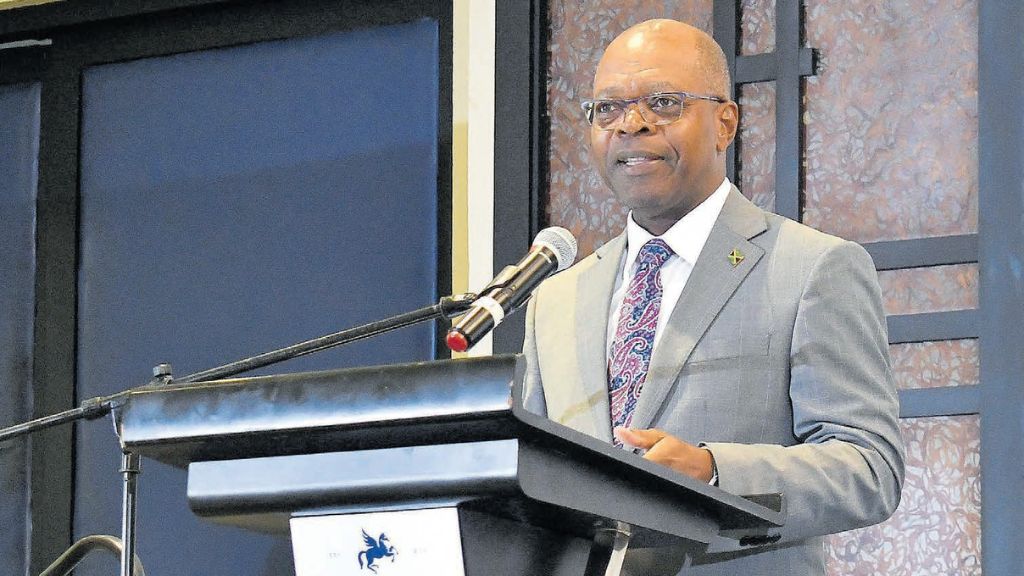
Jamaica’s critical infrastructure operators face mounting pressure to revolutionize their funding approaches as climate disasters and global energy instability reveal the inadequacy of traditional financing models. The urgent call for reform emerged during the Office of Utilities Regulation’s 12th annual stakeholder forum in Kingston, where financial and utility leaders debated solutions to the island’s infrastructure financing crisis.
Jamaica Stock Exchange CEO Livingstone Morrison challenged utility companies to aggressively pursue capital markets through structured instruments including climate bonds, parametric insurance products, and dedicated infrastructure funds. “Capital availability isn’t the constraint—institutional appetite exists,” Morrison asserted. “The missing element is a pipeline of properly governed, investment-ready projects that can attract long-term financing.”
The proposition encountered resistance from National Water Commission acting President Kevin Kerr, who countered that the fundamental challenge lies in the economics of essential infrastructure. “Water projects don’t deliver immediate returns—they ensure future water security,” Kerr emphasized, noting that such investments frequently fail to align with capital market expectations despite their critical importance.
The financing debate gains urgency against Jamaica’s recent experience with Hurricane Melissa, which left 77% of Jamaica Public Service customers without electricity and generated a $350 million restoration bill. Unlike the government’s access to pre-arranged disaster funding mechanisms exceeding $600 million, utilities lack equivalent systems, forcing dependence on post-disaster loans and emergency arrangements negotiated under crisis conditions.
Morrison proposed several market-based solutions including parametric insurance policies that trigger automatic payouts based on predefined storm metrics, alongside expanded use of catastrophe bonds and infrastructure-focused investment vehicles. Jamaica’s existing electricity disaster fund, valued at approximately $50 million, was deemed insufficient given recent storm impacts, highlighting the need for more robust financing structures.
The JSE CEO identified institutional investors—particularly Jamaica’s pension funds holding over $700 billion in assets—as ideal partners for infrastructure projects seeking stable, long-term returns. This capital market push coincides with Jamaica’s accelerated renewable energy transition targeting 50% generation by 2030, which Morrison directly linked to national resilience objectives.
The analysis further highlighted how global energy supply disruptions, including Middle East volatility, intensify pressure on import-dependent economies like Jamaica. Morrison specifically advocated for selective undergrounding of electricity networks in critical zones including medical facilities, commercial districts, and tourism corridors, suggesting such capital-intensive projects could be financed through institutional capital rather than short-term rate increases.
Regulators were urged to strengthen frameworks for resilience financing, including mandates for utilities to maintain comprehensive disaster financing plans and risk-appropriate insurance coverage. “When a single storm can simultaneously disrupt infrastructure, the economy, and the financial system,” Morrison concluded, “pre-arranged financing transitions from theoretical concept to essential strategy.”