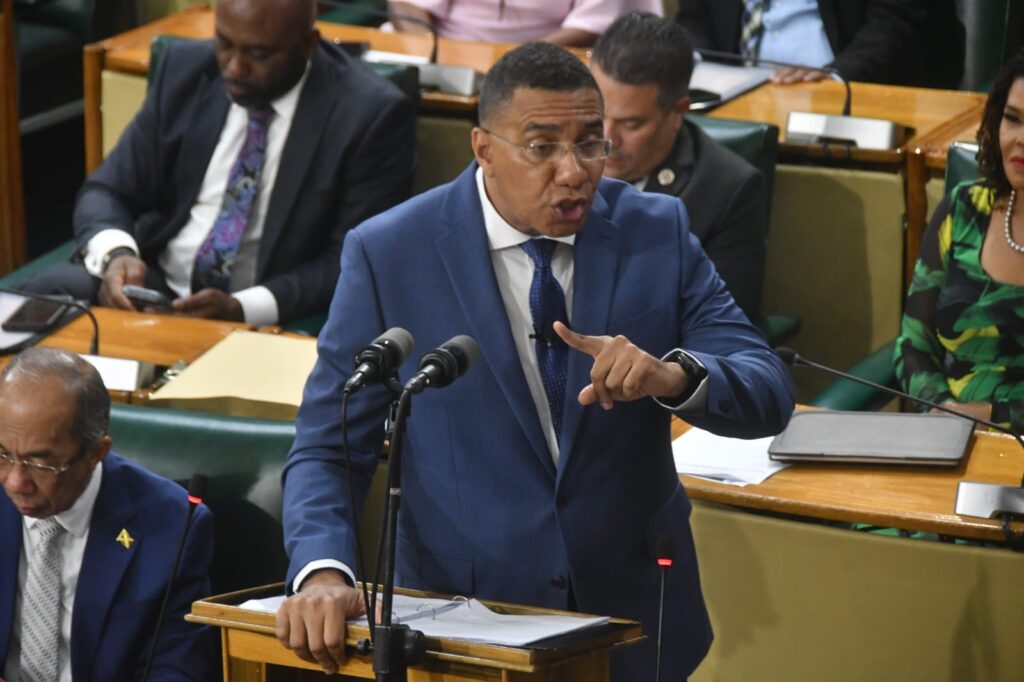
In a dramatic revelation during Thursday’s 2026/27 Budget Debate, Jamaican Prime Minister Andrew Holness disclosed that opposition parliamentarians privately supported the controversial 2023 salary increases while publicly condemning them. The Prime Minister made these assertions while addressing the House of Representatives, directly countering accusations from Opposition Leader Mark Golding, who had earlier criticized Holness for accepting what he termed a ‘massive’ salary increase.
Holness recounted how a member of the People’s National Party’s parliamentary caucus had contacted him to express concerns that the opposition’s public stance might pressure the government to reverse the pay adjustments. According to the Prime Minister, the unnamed PNP representative indicated that all opposition MPs actually agreed with the increases and ‘could not survive without them,’ contradicting their official position.
The Prime Minister highlighted this apparent hypocrisy by noting that despite ‘self-righteous objections,’ no opposition members had declined their salary increases. He specifically mentioned that opposition members were among the first to inquire about their retroactive payments. Holness further contrasted Golding’s public criticism with his financial benefits, noting that the Opposition Leader ‘only talks, many times nonsense, and takes home $27 million,’ adding that Golding had cost taxpayers more than the Prime Minister during the previous term.
In a theatrical moment that generated laughter throughout Parliament, Holness presented Golding with a cap inscribed with the phrases ‘anti-bad mind’ and ‘clean heart’ after offering him a bag as a ‘good gesture,’ which Golding declined. The Prime Minister suggested that Jamaican voters had already settled the matter by granting his Jamaica Labour Party a third consecutive term in September.
The disclosure has intensified the ongoing political controversy surrounding parliamentary compensation, revealing a significant disconnect between political posturing and private positions within Jamaica’s legislative body.