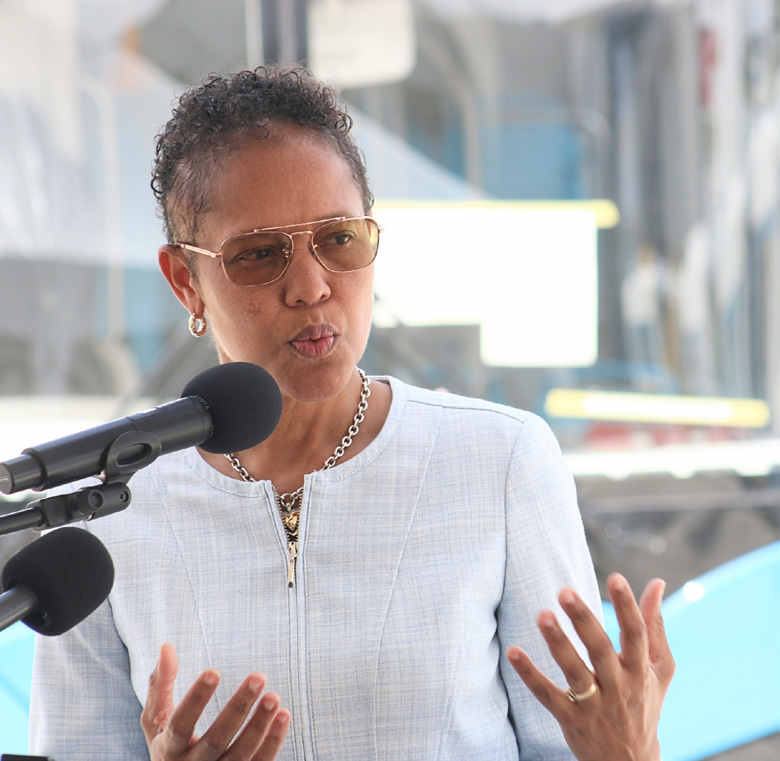
In a significant address during the third day of the Budget debate, Deputy Prime Minister Santia Bradshaw articulated a fundamental shift in the Barbados government’s fiscal strategy. She asserted that the current administration, led by Prime Minister Mia Mottley, is deliberately moving the tax burden away from individuals and onto corporations, thereby challenging the long-held perception that the Barbados Labour Party (BLP) favors big business over the welfare of ordinary citizens.
Bradshaw, who also heads the Ministry of Environment, National Beautification and Fisheries, detailed that the economic team’s focus has pivoted towards accumulating the majority of state revenues through corporation taxes. This strategic reallocation, she explained, is designed to generate the necessary funds to robustly finance the nation’s social service programs. The core philosophy is to utilize corporate contributions to directly benefit the populace, rather than repeatedly taxing individuals.
Central to this economic vision is the administration’s dual commitment to maintaining macroeconomic stability and enhancing social conditions across the island. Bradshaw emphasized that these efforts are strategically aimed at making Barbados a premier destination for foreign investment. She highlighted the role of agencies like Business Barbados in promoting the country’s advantages, noting that investors are increasingly viewing the jurisdiction as a safe, stable, and business-friendly hub, preferable to many other territories for relocating main offices and establishing operations.
Bradshaw lavished praise on Prime Minister Mia Mottley’s leadership, crediting her with elevating Barbados’s stature on the global stage. She described an international ‘Mottley effect,’ where the Prime Minister’s advocacy has secured an influential voice not just for Barbados, but for small island states worldwide. This enhanced diplomatic clout, Bradshaw connected, has directly translated into tangible economic benefits. She pointed to increased cooperation with international funding agencies, which has funneled millions of dollars into the local economy through critical infrastructural projects, including coastal rehabilitation and road rebuilding programs.
However, the Deputy Prime Minister did voice a specific area of criticism amidst her overall endorsement of the budget. She identified a legislative gap concerning the film industry, calling for the implementation of rebates to incentivize and support the millions of dollars invested in international film productions on the island, suggesting this is a necessary step for further economic diversification.