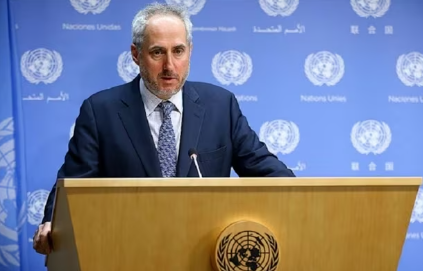
The United Nations has issued a grave warning regarding the escalating humanitarian catastrophe stemming from intensified Middle Eastern hostilities, highlighting severe population displacement and alarming surges in global food and fuel prices. UN spokesperson Stéphane Dujarric revealed that official figures document over 822,000 displaced individuals, including approximately 300,000 children, with about 128,000 people currently sheltering across 600 collective sites throughout the region.
Substantial humanitarian operations are underway with UN agencies and partners distributing approximately 632,000 hot meals and 18,000 ready-to-eat meals to affected populations. Critical water and fuel supplies include more than 382,000 liters of bottled water, over 1,700 cubic meters of clean water delivered via water trucking, and 211,000 liters of fuel to sustain water services for an estimated 700,000 people.
The crisis intensifies as military operations expand, with the United States and Israel conducting airstrikes on Iranian targets while Iran executes retaliatory strikes against sites in neighboring Gulf states. This dangerous escalation occurs alongside deteriorating conditions in southern Lebanon, where hostilities between Israel and armed groups have resulted in growing civilian casualties, widespread destruction, and restricted peacekeeper movements.
UN officials are urgently calling for adherence to UN Security Council Resolution 1701 to stabilize the Israel-Lebanon border while warning of potential disruptions to critical shipping routes through the Strait of Hormuz. UN Under-Secretary-General for Humanitarian Affairs Tom Fletcher emphasized the strategic waterway’s vital importance, noting that any disruption could delay humanitarian shipments by up to six months and dramatically increase costs for essential supplies.
The conflict’s ripple effects are already evident with flour prices in Gaza surging by 270 percent and global shipping costs rising 16 percent compared to the previous year. UNCTAD reports indicate growing disruptions to commercial traffic that threaten humanitarian operations in East Africa and sub-Saharan regions, particularly in famine-threatened nations like Somalia. The UN continues high-level discussions to ensure safe passage of humanitarian cargo through the strategic waterway to prevent millions from losing access to life-saving assistance.