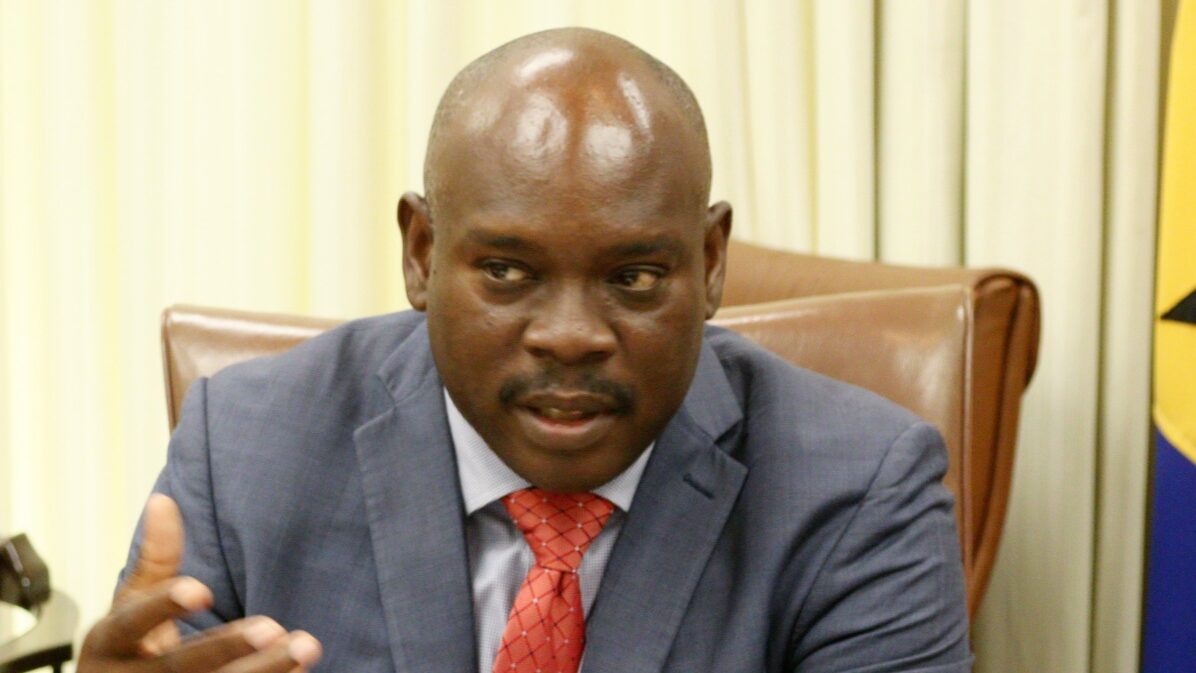
Barbados Finance Minister Ryan Straughn has issued a stark warning that the world, including his island nation, faces imminent recession should oil prices escalate to the speculated $200 per barrel threshold. Delivering the national budget address in the House of Assembly, Straughn emphasized that temporary cost-of-living measures implemented by the government provide only limited protection against the coming energy crisis.
The minister revealed that current economic projections indicate oil prices could skyrocket to between $150 and $200 per barrel if geopolitical tensions continue to intensify. “No matter how you look at it,” Straughn stated, “if any of these scenarios materialize, the world, which includes Barbados, will likely go into recession.”
Straughn delivered a sobering assessment of the government’s fiscal limitations, declaring: “There’s no fiscal response the Government of Barbados could undertake on its own to absorb the impact if any of these scenarios played out. The mathematics just doesn’t work.” Instead, he called for a comprehensive societal response involving government, households, and private sector cooperation.
The finance minister outlined specific conservation measures, urging citizens to carpool, combine errands into single trips, and utilize public transportation during peak hours. For electricity conservation, he recommended switching off unused lights and appliances, installing solar lighting where possible, and maintaining air conditioning units at 24-25 degrees Celsius.
Businesses received directives to audit refrigeration and cooling systems, adopt solar solutions, and reduce energy consumption after operating hours. Straughn emphasized that companies reducing their energy footprint now would gain competitive advantages when prices eventually normalize.
Highlighting the connection between energy costs and food prices, Straughn encouraged support for local agriculture and domestic food production. “Every dollar kept in the local food economy is a dollar that does not depend on imported fuel to reach our table,” he noted, revealing that Barbados spent $519 million on fuel imports even during the pandemic’s peak lockdowns.
Despite the grim projections, the minister expressed confidence in national resilience, invoking his grandmother’s wisdom: “God helps those who help themselves.” He concluded that Barbados would overcome the challenges through collective action and shared commitment to energy conservation and local production.