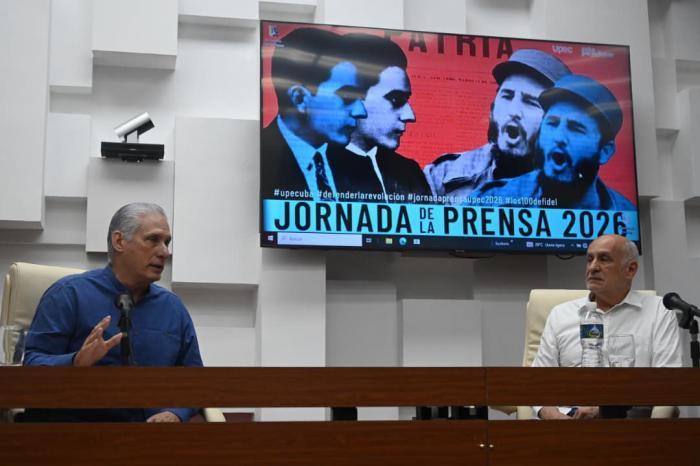
In a landmark address commemorating Cuban Press Day, President Miguel Díaz-Canel Bermúdez outlined an ambitious vision for the nation’s media landscape, emphasizing digital transformation and revolutionary continuity. The gathering brought together over 80 media professionals, including veteran journalists and emerging digital specialists, to discuss the evolving role of press in contemporary Cuba.
Addressing representatives from print, digital, television, and radio outlets, the President highlighted the dual challenge and opportunity presented by new technologies. “We now possess digital platforms, social media channels, and artificial intelligence tools that transcend traditional limitations of space and time,” Díaz-Canel stated, positioning these developments as crucial assets in modern information warfare.
The dialogue revealed significant structural shifts within Cuban media organizations. Granma newspaper, the official Communist Party publication, has fundamentally reorganized its operations to function as “a digital newspaper with weekly print editions,” according to editor-in-chief Yoerky Sánchez Cuellar. This transformation required overcoming print-centric mentalities and implementing 24/7 digital news cycles.
President Díaz-Canel emphasized the strategic importance of digitizing Cuba’s extensive historical archives, containing priceless photographic records and original writings by revolutionary leaders including Fidel Castro. These materials, he noted, represent both cultural treasures and ideological resources for current geopolitical struggles.
The discussion addressed practical adaptations to Cuba’s economic challenges, including fuel shortages that have necessitated community-based reporting and increased reliance on social media platforms. Media organizations like Ideas Multimedios and Cubadebate have developed self-funded models that maintain financial stability while expanding renewable energy infrastructure and employee compensation.
Díaz-Canel framed the media’s role within the context of “sixth-generation warfare,” describing Cuban journalists as frontline defenders in ideological and cultural conflicts. “The press serves as both communication tool and sovereign agent,” he asserted, emphasizing its educational function in developing public media literacy and resistance to manipulation.
The President concluded by celebrating the press’s active role in promoting popular participation, documenting positive national experiences, and maintaining constructive criticism—all while preserving the revolutionary merit that has historically characterized Cuban journalism.