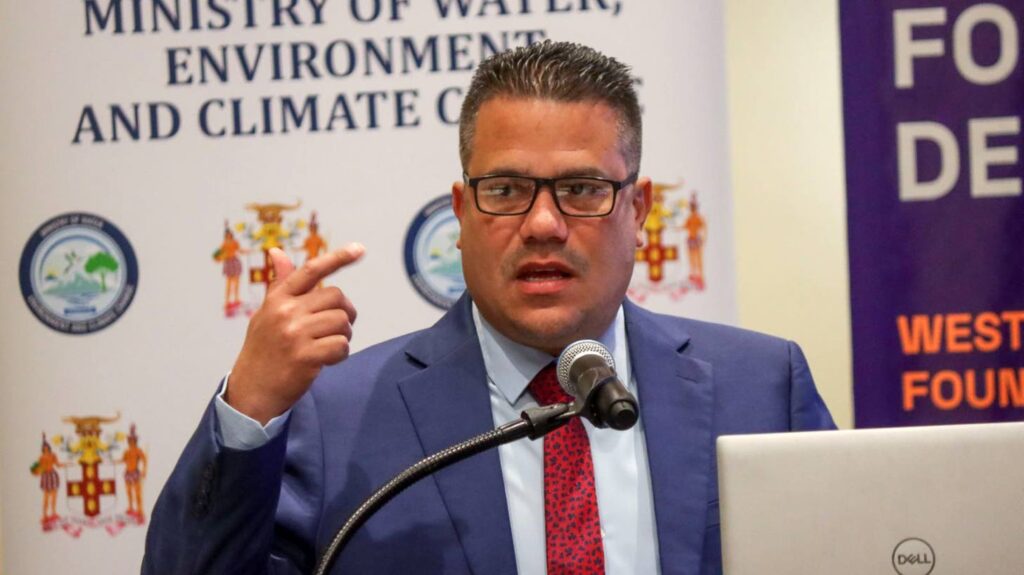
Jamaican Climate Change Minister Matthew Samuda has publicly endorsed recent governmental audits examining the nation’s climate response strategies, characterizing them as essential tools for identifying systemic weaknesses. The audits, conducted by Auditor General Pamela Monroe Ellis and presented to Parliament, provide a comprehensive evaluation of Jamaica’s environmental governance mechanisms.
During consultations for Jamaica’s pioneering climate change framework legislation—slated for completion this year—Minister Samuda acknowledged the audit’s findings while highlighting Jamaica’s recognized leadership among developing nations in climate policy. “Audits are particularly important if you are to identify weaknesses and identify gaps that need to be solved,” Samuda stated, emphasizing his non-objection to the critical assessment.
The auditor general’s report, titled ‘Plans and Assessment of Jamaica’s Climate Response,’ acknowledged meaningful progress in climate governance alignment with global commitments, climate finance mobilization, and institutional structuring. However, it identified significant gaps including absent dedicated climate legislation, fragmented local coordination, inadequate stakeholder engagement, and insufficient inclusion of vulnerable communities.
Monroe Ellis noted that while climate monitoring and finance systems are evolving, they lack centralized public access. Legislative oversight remains fragmented, with the judiciary yet to engage in climate enforcement. The audit was conducted as part of a global initiative by the International Organization of Supreme Audit Institutions, providing benchmarking for Jamaica’s efforts as a climate-vulnerable small island developing state.
A second tabled report, ‘Jamaica’s Progress Towards Implementation of Key Climate Change Adaptation Actions and Plans,’ found that despite establishing foundational policy direction and securing grant funding for resilient projects, implementation pace remains insufficient. Procurement delays, staffing shortages, and slow mainstreaming of climate risks into sector planning have hindered national adaptation efforts, even with approved Green Climate Fund financing.
Minister Samuda positioned the forthcoming climate legislation as the regulatory “anchor” for Jamaica’s international climate leadership, transitioning from policy commitments to enforceable frameworks. “Policy never supersedes legislation,” he argued, acknowledging that while Jamaica has led developing nations in climate approaches, statutory frameworks must reflect climate realities.