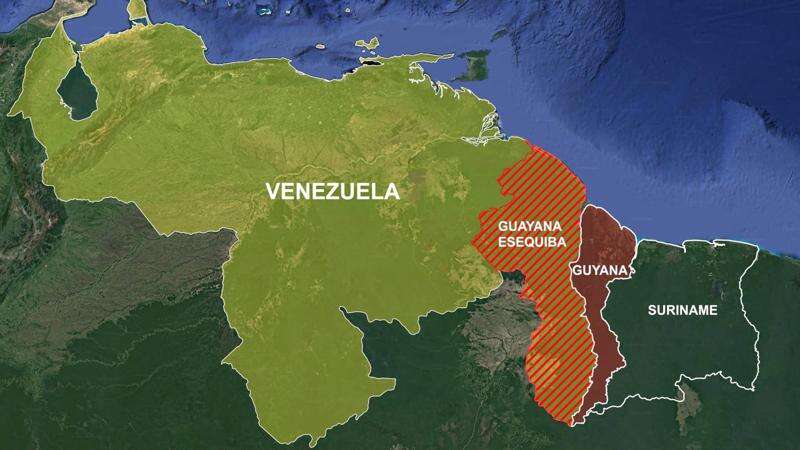
The Guyanese government has issued a firm rebuttal to Venezuela’s claims regarding maritime jurisdiction in the Essequibo region, asserting that Caracas possesses no legal authority over these contested waters. This diplomatic response comes following Venezuela’s allegations that Guyana has engaged in unilateral exploration activities within disputed maritime territory and that the maritime boundary remains legally unresolved.
In an official statement from Guyana’s Ministry of Foreign Affairs, authorities emphasized that the land boundary between the two nations was definitively established through the 1899 Arbitral Award, which settled the territorial frontier between what was then British Guiana and Venezuela. The ministry stated this historical settlement provides Guyana with unquestionable authority to conduct seismic surveys and authorize economic activities within its maritime zones.
“The Government of Guyana maintains the absolute right to permit activities within maritime areas adjacent to its coastal territory as defined by the 1899 Arbitral Award,” the foreign ministry declared. It further noted that Venezuela has historically benefited from the stability and legal clarity provided by this century-old settlement, making its current objections particularly inconsistent.
Guyana’s response specifically rejects Venezuela’s protest against a ongoing 3D seismic survey covering 25,000 square kilometers of offshore territory. The government maintains these activities occur unequivocally within Guyana’s Exclusive Economic Zone (EEZ) and continental shelf, where Georgetown exercises full sovereign rights under international law.
The ministry characterized Venezuela’s position as “unfounded, inaccurate and entirely inconsistent” with established principles of international law, particularly regarding maritime boundaries. Guyana reaffirmed its sovereignty up to 12 nautical miles in the territorial sea and its sovereign rights beyond this limit within its EEZ and continental shelf.
This exchange represents the latest development in a long-standing territorial dispute between the South American neighbors, with significant implications for offshore resource development and regional diplomacy.