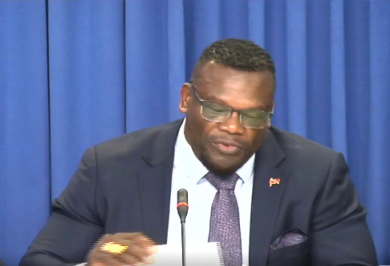
TRINIDAD AND TOBAGO – In a significant development for regional security cooperation, Trinidad’s Homeland Security Minister Roger Alexander has confirmed that the United States has furnished the Caribbean nation with a comprehensive list of individuals linked to narcotics trafficking, illegal firearms, and organized violence. The intelligence sharing occurs under the framework of the Americas Counter Cartel Coalition, a multilateral initiative spearheaded by former US President Donald Trump.
Minister Alexander, while maintaining discretion regarding specific operational details for national security reasons, emphasized the profound strategic importance of this collaboration in an interview with the Express newspaper. He articulated that public commentary often overlooks the critical significance of Trinidad and Tobago’s status as a signatory to this coalition, which facilitates coordinated intelligence exchange, joint law enforcement actions, and combined military operations among member states.
This coalition currently comprises 19 nations, with Trinidad and Tobago and Guyana standing as the sole Caribbean representatives amidst 17 Latin American members. Alexander expressed profound personal conviction regarding this partnership, stating the initiative’s unique character and its alignment with the current government’s strategic direction under Prime Minister Kamla Persad-Bissessar.
The Minister highlighted the United States’ extensive global intelligence capabilities, noting that American authorities meticulously assess potential international partners based on reliability and trustworthiness in joint security endeavors. This foundation has led to a clear expression of US confidence in collaborating with the Trinidad and Tobago government.
This enhanced cooperation unfolds against a backdrop of intensified US counter-narcotics operations in the region, including kinetic military strikes against suspected drug trafficking vessels since September 2025. These operations have reportedly resulted in over 100 casualties, including citizens from Trinidad and Tobago and St. Lucia.
Minister Alexander defended the principled use of force within legal boundaries as essential for confronting severe criminality. He voiced strong support for aggressive measures against traffickers whose activities perpetuate violence and societal decay, particularly impacting youth development. With Trinidad and Tobago currently operating under a state of emergency, Alexander positioned the US alliance as a pivotal mechanism for confronting national security threats, predicting this partnership will forge a new chapter in the nation’s history.