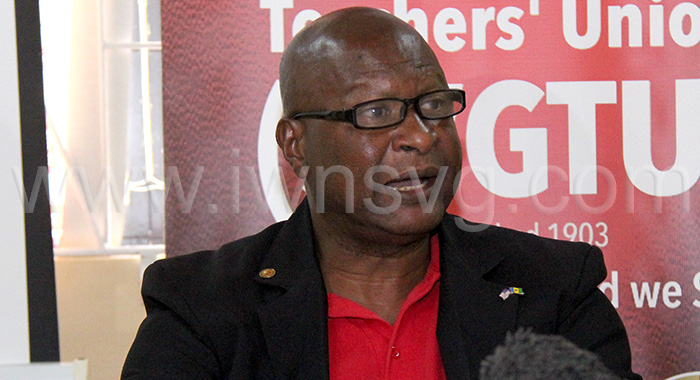
Oswald Robinson, the outgoing president of the St. Vincent and the Grenadines Teachers’ Union (SVGTU), has launched scathing criticism against the Ministry of Education for allegedly ignoring repeated requests to address urgent educational concerns. During a recent appearance on BOOM FM’s “Teachers’ Talk” program, Robinson expressed frustration that three education ministers and the chief education officer have failed to respond to written communications seeking dialogue on pressing matters.
The union leader highlighted multiple critical issues requiring immediate attention, including severe shortages of basic school supplies, deteriorating infrastructure at several educational institutions, and systemic challenges in public education financing. Robinson specifically referenced the “Go Public! Fund Education” global campaign initiated by Education International, emphasizing the need for adequately funded public education systems despite the government’s significant fiscal constraints.
Robinson revealed that the newly elected administration under Prime Minister Godwin Friday has inherited a substantial EC$3.5 billion public debt, with a debt-to-GDP ratio exceeding 103%. This financial burden requires approximately 40 cents of every dollar to be allocated toward debt servicing, creating complex challenges for education funding. The Eastern Caribbean Currency Union has established targets to reduce the debt-to-GDP ratio to 60% by 2035.
The outgoing union president provided specific examples of institutional neglect, including bat infestations at New Adelphi Secondary School, missing leadership positions at Bethel High School, and severely compromised infrastructure with leaking roofs and missing louvres. Robinson also reported that some schools lack even basic supplies like chalk and toilet paper, while others have experienced interruptions to their feeding programs.
Robinson warned that the current administration’s avoidance of dialogue with educators establishes a poor foundation for collaborative progress. He emphasized that social dialogue remains essential for addressing these systemic challenges and urged education officials to engage with the union’s perspectives before conditions deteriorate further.