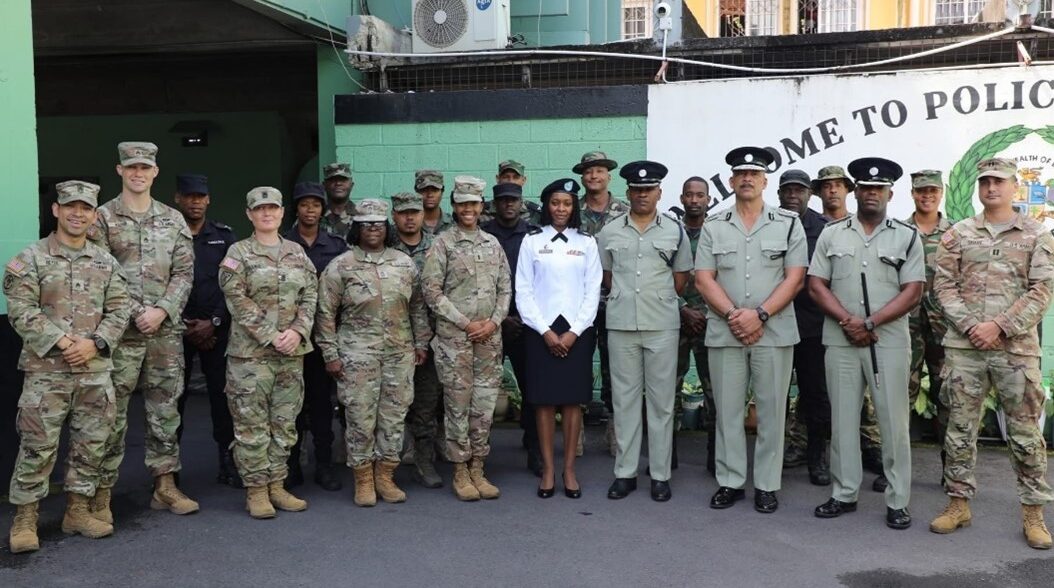
In a significant demonstration of international security cooperation, U.S. and Dominican forces have concluded an intensive tactical medical exchange program that promises to enhance emergency response capabilities throughout the region. The five-day training initiative, conducted from February 23-27, brought together specialists from the U.S. Virgin Islands Army National Guard and the Commonwealth of Dominica Police Force for hands-on skill development.
The comprehensive program focused on the MARCH protocol—an evidence-based approach to trauma care encompassing Massive hemorrhage control, Airway management, Respiration, Circulation, and Head trauma/hypothermia prevention. Participants engaged in both theoretical learning and practical application, culminating in realistic field simulations that tested their newly acquired life-saving techniques.
Chief Lincoln Corbette of the Dominican Police Force expressed profound appreciation for the collaborative effort, noting: ‘We were blessed with practical knowledge that substantially strengthens our operational capabilities. Our partnership with the United States continues to deepen, and we anticipate further expanding this productive cooperation.’
The training deployment was spearheaded by First Lieutenant Keyvil King of the U.S. Virgin Islands Army National Guard, with additional support from U.S. Army Civil Affairs personnel working in coordination with the U.S. Embassy in Bridgetown. These personnel simultaneously engaged in strategic relationship-building exercises to identify future collaborative opportunities.
Captain Elbert Smart, Civil Affairs Team Leader, characterized the exchange as ‘both an honor and a pleasure,’ emphasizing that such initiatives ‘strengthen professional relationships and establish enduring partnerships.’
According to official statements from the U.S. Embassy, this joint effort reflects the committed partnership between the United States and Dominica to enhance regional resilience, advance professional development standards, and significantly improve emergency preparedness protocols throughout the Caribbean region.