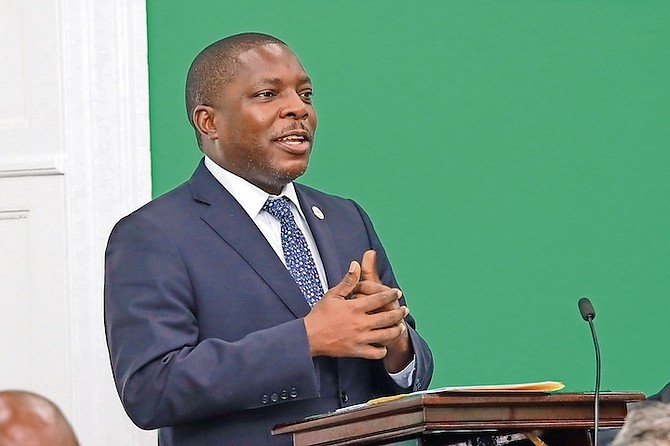
As The Bahamas approaches a pivotal general election later this year, residents of Centreville presented sharply contrasting evaluations of their parliamentary representative Jomo Campbell and the broader Davis administration’s governance.
A spectrum of perspectives emerged from community interviews, revealing deep divisions in voter satisfaction. Seventy-eight-year-old Edward Rahming, a lifelong Centreville resident, offered measured approval of MP Campbell. While acknowledging no personal relationship, Rahming noted the parliamentarian’s visible presence in the constituency and affirmed his continued support for the Progressive Liberal Party, citing multi-generational family voting traditions.
Conversely, Carew Street entrepreneur John Sands expressed profound disillusionment, claiming complete absence of engagement from his elected official since the PLP’s 2021 electoral victory. Sands articulated strong criticisms regarding economic equity, alleging that government policies disproportionately benefit business interests connected to power structures while neglecting middle-class empowerment. He further raised unsubstantiated allegations regarding employment practices in government contracts.
The constituency’s competitive electoral history adds significance to these divergent views. Centreville previously alternated between political parties, with former Prime Minister Perry Christie holding the seat before its 2017 loss to the Free National Movement, subsequently regained by Campbell in the last election.
Community safety assessments varied considerably among respondents. Memorial center operator Vaughn Jones credited the MP with maintaining neighborhood stability, noting reduced criminal activity after business hours. However, Jones highlighted unmet governmental commitments regarding funeral industry regulation, despite repeated stakeholder engagements with health authorities.
Infrastructure and public safety concerns surfaced in multiple interviews. Sixty-seven-year-old Montrose Avenue resident Claude Higgs praised Campbell’s overall performance while highlighting dangerous traffic conditions requiring immediate intervention through traffic control measures. Simultaneously, thirty-seven-year resident Elizabeth Rolle reported never encountering political representatives despite decades in the community. While expressing electoral participation intentions, Rolle voiced frustration with perceived governmental inaction and requested enhanced police patrols to address property crimes.
The collective testimony reveals a constituency grappling with complex socioeconomic challenges while evaluating political representation through starkly different experiential lenses.