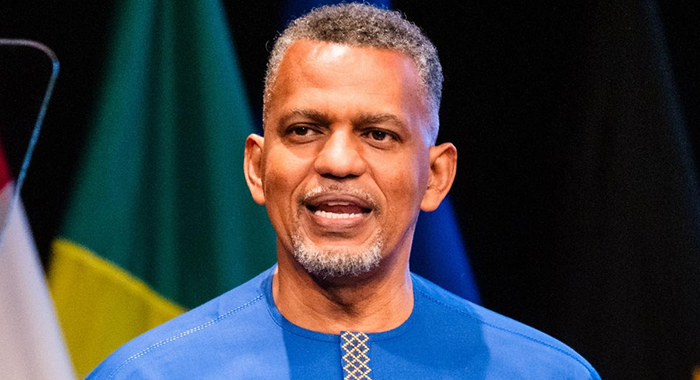
BRIDGETOWN, Barbados — The Caribbean Development Bank (CDB) has declared a critical ‘decade of decision’ for the region, unveiling an ambitious strategic framework to navigate unprecedented global challenges. CDB President Daniel M. Best presented the bank’s transformative agenda during its annual news conference on March 3, emphasizing that geopolitical tensions, climate volatility, technological disruption, and supply chain realignments are fundamentally reshaping the economic landscape.
The bank’s assessment reveals that the Caribbean requires an estimated US$65.2 billion between 2024-2033 to prevent economic stagnation. This financing need could potentially double when accounting for comprehensive climate adaptation measures, infrastructure reinforcement, and fiscal buffer establishment, with additional external pressures potentially driving requirements even higher.
CDB’s Strategic Plan 2026–2035 establishes a triple-pillar approach to regional resilience:
Social Resilience: Ensuring reliable access to essential services, poverty reduction, inclusive social protection, and enhanced education and healthcare systems.
Economic Resilience: Diversifying and modernizing economies through climate-resistant infrastructure, robust fiscal systems, digital connectivity, food security, cultural sector development, and private sector-led green innovation.
Environmental Resilience: Addressing what President Best termed the ‘existential’ Caribbean priority through climate adaptation, mitigation, and nature-positive development strategies.
Operational priorities will focus on youth development, institutional strengthening, and climate action. With half the region’s population under 30, investments will target skills development, entrepreneurship, and employment pathways. Institutional enhancements will address procurement bottlenecks, fiscal management gaps, and implementation inefficiencies.
Regarding climate financing, Best noted the stark disparity between needs and availability: ‘Our region requires approximately US$14 billion annually for climate response but mobilizes less than 10% of that. CDB is committing 30% of our total financing and 35% of our Special Development Fund resources to climate adaptation and mitigation.’
The bank reaffirmed its commitment to Haiti, emphasizing strengthened country presence and targeted support for micro, small and medium enterprises, renewable energy, and disaster risk management.
To support this expanded ambition, CDB is bolstering its financial capacity through multiple instruments including a CHF 100 million Swiss market capital raise, a US$450 million Exposure Exchange Agreement, and an upcoming Euro Medium-Term Note Programme enabling up to US$1 billion in issuance over three years. These initiatives build upon CDB’s AA+ credit rating recently reaffirmed by Fitch Ratings with a stable outlook.
Concluding his address, Best envisioned a 2035 Caribbean recognized as one of the world’s most resilient regions, characterized by modernized institutions, harmonized disaster risk systems, digital public administration, and globally competitive youth-led enterprises.
The annual conference served as a platform for CDB to outline its strategic vision, assess 2025 regional economic performance, and present the 2026 economic outlook while highlighting key project outcomes and institutional priorities.