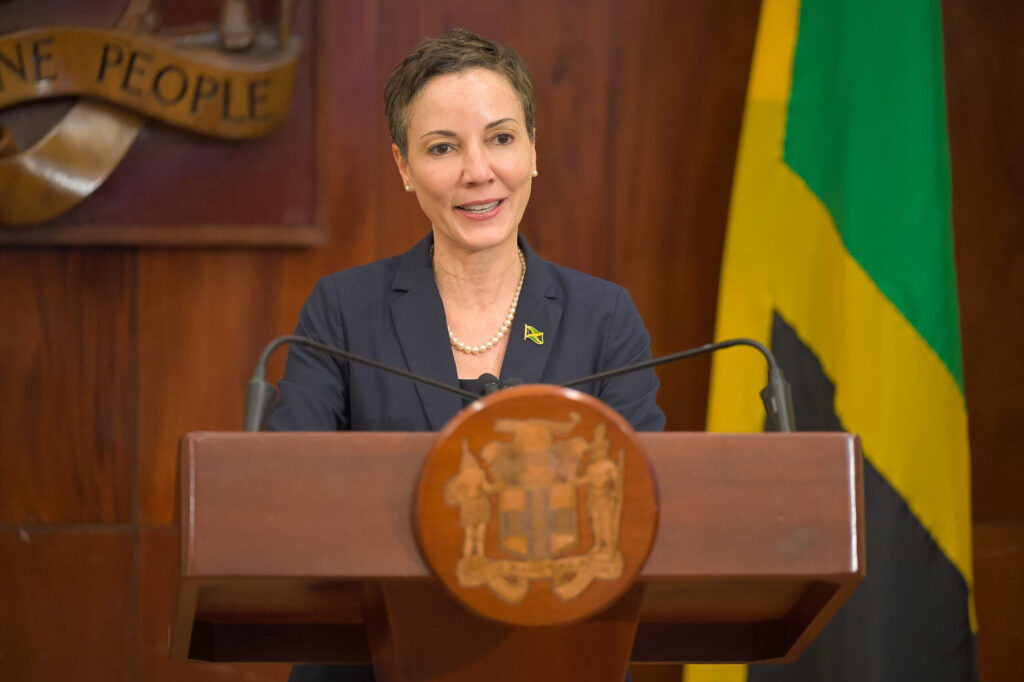
KINGSTON, Jamaica — Jamaica’s Foreign Affairs Minister Kamina Johnson Smith has reaffirmed confidence in the nation’s strategic partnership with the United States despite criticism from a US Congressman regarding Prime Minister Andrew Holness’s supportive stance on Cuba. The diplomatic reassurances came during Tuesday’s post-Cabinet media briefing at Jamaica House, where Johnson Smith characterized the Prime Minister’s recent comments on Cuba as “balanced, visionary, and realistic.”
The minister referenced her recent cordial meeting with US Secretary of State Marco Rubio as evidence of continued strong bilateral relations, suggesting that individual congressional opinions don’t reflect official US government positioning. This response followed criticism from Cuban-born Congressman Carlos Giménez, who warned Jamaica would face “consequences” for what he termed as covering up for Cuba’s “moribund dictatorship.”
The controversy stems from Prime Minister Holness’s February 24 address to Caribbean Community (CARICOM) leaders in Basseterre, where he urged regional nations to address Cuba’s humanitarian crisis “with clarity and courage.” His speech highlighted the complex geopolitical circumstances surrounding US-Cuba relations while acknowledging Jamaica’s fundamental commitment to democratic principles and open markets.
Holness emphasized that Cuba’s ongoing economic struggles—exacerbated by extended power cuts and shortages of fuel, medicine, and food—could have regional implications affecting migration patterns, security concerns, and economic stability throughout the Caribbean basin. The Prime Minister noted Cuba’s historical role in supporting Caribbean neighbors through medical and educational assistance while maintaining that Jamaica’s position remains grounded in democratic values and political accountability.
The current crisis in Cuba has intensified following the Trump administration’s oil blockade, which severed the island nation’s primary petroleum supplies from Venezuela. Cuba has operated under a US trade embargo since 1962, creating prolonged economic challenges that have recently reached critical levels.