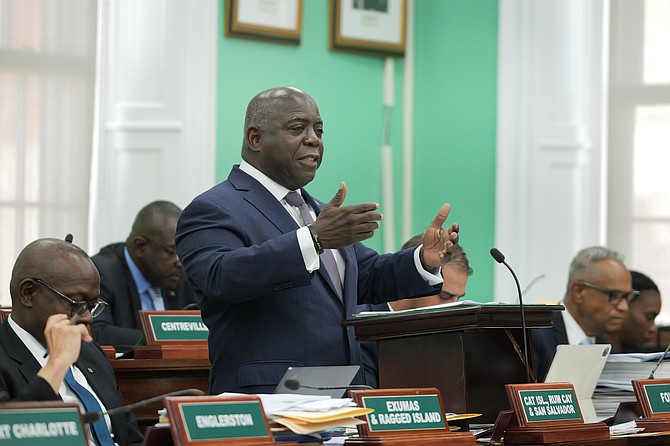
Prime Minister Philip ‘Brave’ Davis has characterized the substantial increase in government arrears and unpaid invoices as evidence of vigorous project implementation rather than fiscal mismanagement. His comments came in response to parliamentary documents revealing that outstanding balances to suppliers and service providers nearly doubled from $122.4 million to $241.9 million between December 2024 and December 2025.
According to the Prime Minister’s breakdown, $60.5 million represents carryover arrears from previous fiscal years, while $181.4 million constitutes current fiscal year invoices typically settled within a 90-day window. The Ministry of Works emerged as the largest debtor with $68.1 million in combined arrears and unpaid capital expenditure invoices, followed by the Water & Sewerage Corporation at $38.1 million and the Ministry of the Public Service at $24.3 million.
Davis attributed the increased liabilities to accelerated infrastructure activities encompassing roadworks, drainage management, and building maintenance projects across airports, clinics, and educational facilities. He emphasized that the outstanding balances reflect seasonal cash flow pressures combined with support for essential services and active project execution.
The administration is implementing enhanced fiscal controls including strengthened commitment mechanisms, improved cash forecasting, and structured arrears reduction strategies within a broader framework of fiscal consolidation. Davis noted that excluding obligations to public corporations would reduce the outstanding balance increase to approximately $29 million.
Beyond immediate arrears, the government is confronting systemic fiscal vulnerabilities through director training programs for state-owned enterprises and a comprehensive guarantee policy framework. The Prime Minister also identified mounting pension obligations—projected to reach $4.1 billion by 2032—as another critical challenge, with current pension and gratuity payments consuming 6.2% of recurrent expenditure.
A forthcoming pension reform legislation will establish contributory accounts for both employees and the government, featuring protection against negative investment returns and flexible benefit options. Simultaneously, public sector wages have increased from $738.4 million to $937.9 million under the current administration, with adjustments addressing recruitment challenges and cost-of-living pressures for Bahamian workers.