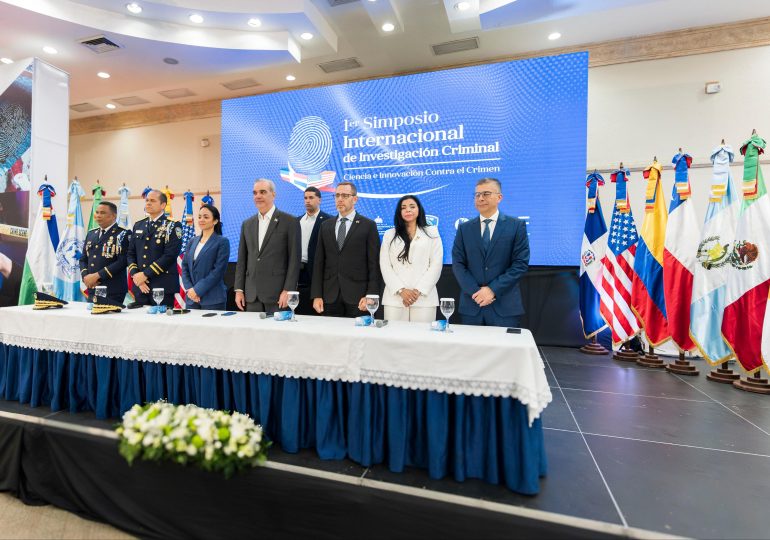
SANTO DOMINGO – In a significant policy address, Attorney General Yeni Berenice Reynoso has advocated for a fundamental strategic shift in combating organized crime, proposing that law enforcement agencies analyze criminal operations through the framework of market economics rather than pursuing individual cases in isolation.
Speaking at the First International Symposium on Criminal Investigation—a cornerstone event within the nation’s comprehensive Police Reform initiative—Reynoso articulated her vision before an audience including President Luis Abinader, Interior and Police Minister Faride Raful, and National Police Director Andrés Modesto Cruz Cruz.
The Attorney General criticized the conventional investigative approach prevalent in many jurisdictions, where crimes are addressed singularly without examining the broader ecosystem they inhabit. She contended that this fragmented methodology persistently fails to dismantle criminal infrastructures effectively. Instead, Reynoso championed the concept of conducting holistic ‘criminal market analyses’ to develop more impactful and sustainable security outcomes.
Elaborating on her thesis, Reynoso delineated how illicit activities operate within a sophisticated ‘criminal economy’ that mirrors the principles of its legal counterpart, particularly the fundamental law of supply and demand. Criminal enterprises, she explained, dynamically calibrate their operations according to market fluctuations: escalating production to meet rising demand, reducing prices in response to oversupply, and capitalizing on scarcity to inflate costs.
Reynoso identified a critical vulnerability in contemporary security strategy: the widespread failure of investigative bodies to comprehend the functional mechanics of specific illicit markets. This analytical gap, she asserted, fundamentally undermines the efficacy of efforts to disrupt and permanently eradicate organized crime networks, necessitating a paradigm shift towards economic behavior analysis in criminal investigations.