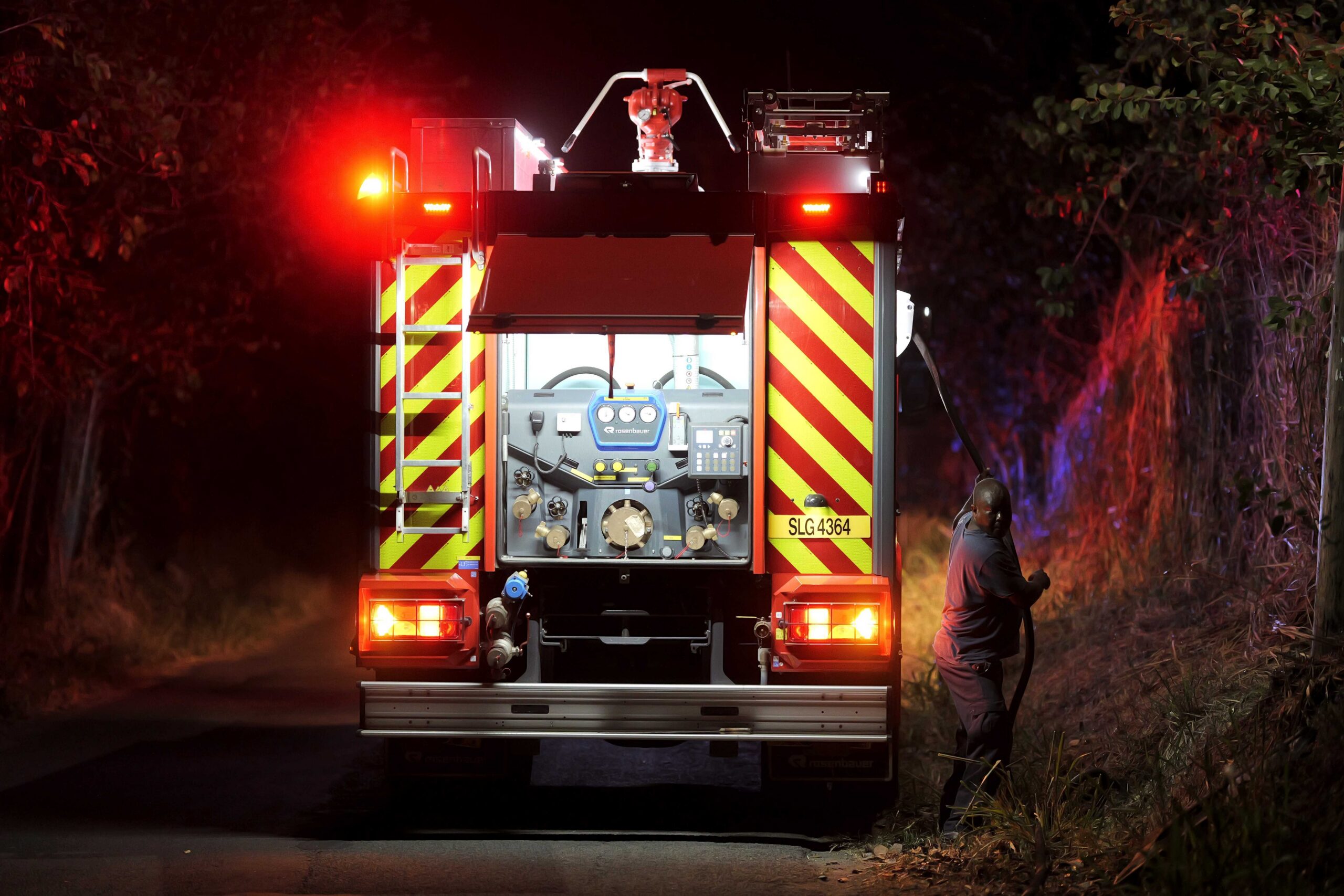
The community of Vieux Fort faces mounting challenges as recurrent bushfires continue to disrupt daily life, posing significant health risks and economic strain. Local business owners and educational institutions report ongoing struggles with the environmental hazard that has plagued the area for years.
Nathaniel Mathurin, proprietor of Patos Bar, detailed the direct economic impact: ‘Customer patronage plummets when fires erupt unexpectedly, forcing immediate business closures.’ Mathurin expressed uncertainty about the fires’ origins—whether natural or human-caused—while noting the pattern has intensified over the past two years. He suggested area development for recreational purposes might reduce combustible vegetation.
Despite skepticism about permanent solutions, Mathurin praised emergency responders for their vigilant monitoring and rapid intervention, particularly near residential zones. The health implications hit close to home as he described household air quality becoming so severe that evacuation becomes necessary for breathing safety.
At Plain View Combined School, Principal Roselinda Pultie reported managing smoke infiltration primarily from nearby commercial operations and residential backyard fires rather than direct bushfire flames. The school implements protective measures including window closures, mask distribution, and air conditioning activation during smoke events, which typically subside within 30 minutes but particularly concern asthmatic students.
Donna Antoine, business owner of The Cocktail Hideout, described pervasive ash and smoke infiltration that persists for days despite closed premises. She recounted narrowly preventing smoke damage to outdoor laundry during a sudden fire outbreak and noted accumulating ash requiring disposal. Antoine echoed suspicions about deliberate fire-starting by individuals, advising community members to maintain closed homes to minimize interior contamination.
The collective accounts reveal a community balancing resilience with frustration, implementing individual protective strategies while seeking broader solutions to an environmental challenge that affects respiratory health, economic stability, and quality of life.