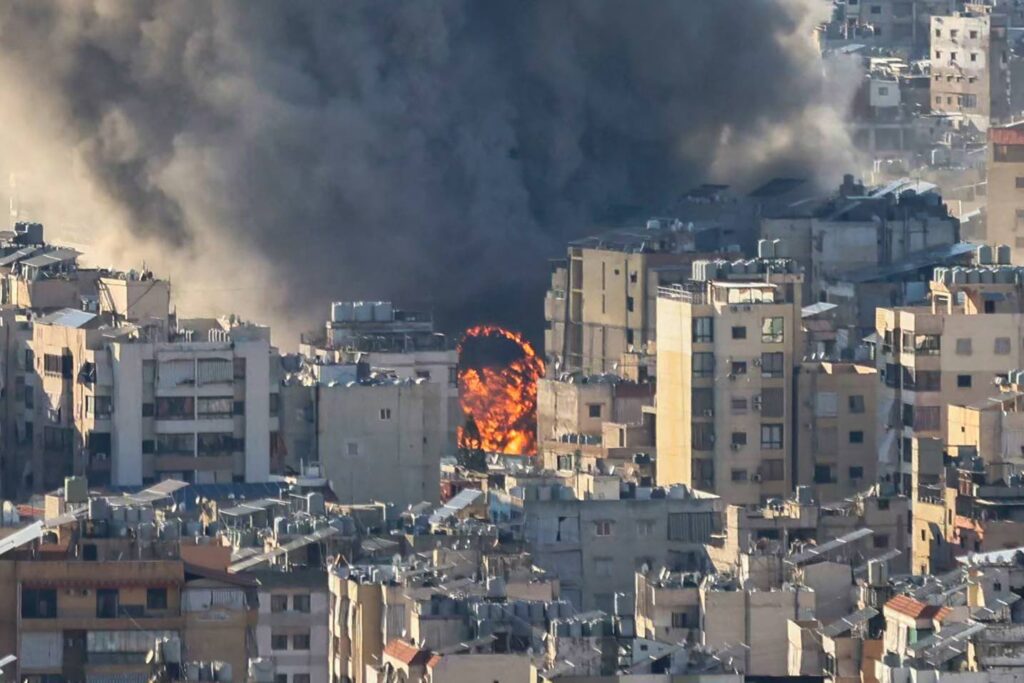
BEIRUT, Lebanon — The Middle East plunged deeper into a widening military conflict on Monday as joint U.S.-Israeli operations against Iran triggered retaliatory actions across the region, creating severe disruptions to global energy markets and threatening international economic stability.
The conflict escalated dramatically with new Israeli airstrikes targeting Tehran, where residents reported multiple explosions throughout the day. In a significant development, Iranian authorities formally accused the United States and Israel of attacking their nuclear facility at Natanz, marking the first such acknowledgment since hostilities began. This site had previously been a focal point during the June 2025 confrontation between the nations.
Energy infrastructure across the Gulf region sustained substantial damage, with Saudi and Emirati oil facilities struck, Qatar suspending liquefied natural gas production, and multiple tankers attacked near Oman. The critical maritime passage through the Strait of Hormuz was temporarily closed, causing European benchmark gas prices to surge over 50% and raising concerns about global energy security.
U.S. President Donald Trump issued provocative statements warning that ‘the big wave hasn’t even happened yet’ and promising more significant attacks were ‘coming soon.’ The President notably declined to rule out deploying American ground forces to Iran during an interview with the New York Post, stating he would consider it ‘if necessary.’
The conflict has already claimed the lives of four U.S. military personnel, with three fighter jets accidentally downed by Kuwaiti air defenses. Iranian media reports indicate hundreds of casualties, though these figures remain unverified by independent sources.
Tehran presented a scene of devastation and exodus, with many residents fleeing the city and those remaining scrambling for essential supplies. The atmosphere combined palpable fear with cautious optimism among some citizens hoping the conflict might bring governmental change.
The conflict spread beyond Iran’s borders, with an Iranian drone striking a UK air force base in Cyprus, prompting evacuations and raising concerns about broader international involvement. UK Prime Minister Keir Starmer clarified that British military bases in Cyprus would not be made available to U.S. forces for operations against Iran, marking a shift from previous agreements.
Lebanon became increasingly embroiled in the conflict as violence escalated between Israel and Hezbollah. Israeli military leadership vowed to deliver ‘a devastating blow’ to the Iran-backed group, while Lebanon’s government announced an immediate ban on all Hezbollah military activities—a move that sparked condemnation from the organization.
The human toll continued to mount with Israeli strikes in Lebanon killing at least 31 people, according to local authorities. Meanwhile, families across southern Lebanon fled their homes, creating scenes of displacement reminiscent of previous regional conflicts.
The strategic Strait of Hormuz became a battleground with three commercial vessels attacked on Sunday, following Iranian warnings against maritime traffic through the crucial waterway. These developments raised alarms about the security of global shipping lanes and energy transportation routes.
President Trump and Israeli Prime Minister Benjamin Netanyahu jointly called for Iranians to overthrow their government, escalating the rhetorical warfare alongside the physical conflict. The current violence represents the most significant regional confrontation since the 1979 Islamic Revolution fundamentally altered Middle East geopolitics.