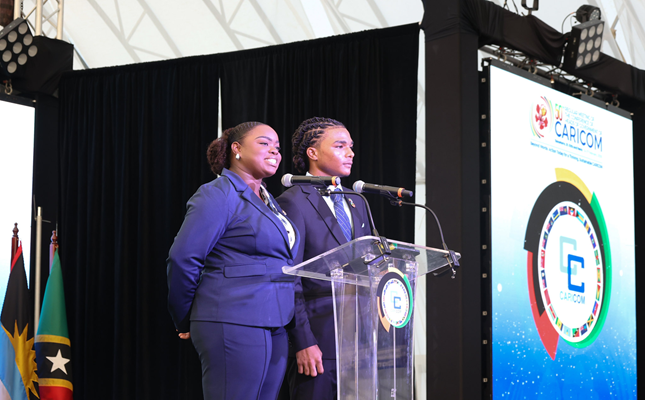
At the landmark 50th Conference of CARICOM Heads of Government in St. Kitts and Nevis, Youth Ambassadors Aquanjé Robinson and Siobhan Phipps-Harding delivered a compelling call for transformative action that resonated through the opening ceremony. The young leaders articulated a clear vision for moving beyond symbolic unity toward tangible regional progress.
Phipps-Harding established the tone by emphasizing the critical juncture at which the Caribbean Community finds itself. “Our Region’s people and youth are no longer looking for togetherness written in ink,” she declared, “but they are looking for progress etched into our landscapes.” Her remarks highlighted the growing impatience with diplomatic formalities without substantive implementation.
The ambassadors identified pressing regional challenges including climate volatility, unsustainable debt burdens, and brain drain migration patterns that deprive Caribbean nations of their most talented citizens. They framed these issues not as insurmountable obstacles but as opportunities for coordinated regional response.
Robinson powerfully reframed the Caribbean narrative around the concept of resilience as historical inheritance rather than contemporary buzzword. “It is woven into our shared history,” he noted, “from the resistance of our ancestors to the reconstruction of our islands after every storm.” This resilience, he argued, provides the foundation for bold, intentional action.
The youth representatives outlined specific pillars for a thriving CARICOM: digital connectivity to dissolve educational and commercial borders, food security to break import dependence, and climate justice that transitions from rhetoric to tangible community protection. They emphasized that true regional integration requires governing “with the resolve of one Caribbean” despite geographical separation.
Both ambassadors closed with a unified message urging leaders to ensure this historic meeting would be remembered for visionary implementation rather than elegant speeches. Their concluding statement—”our Region’s future is bright because we are building it together”—served as both encouragement and reminder of collective responsibility.