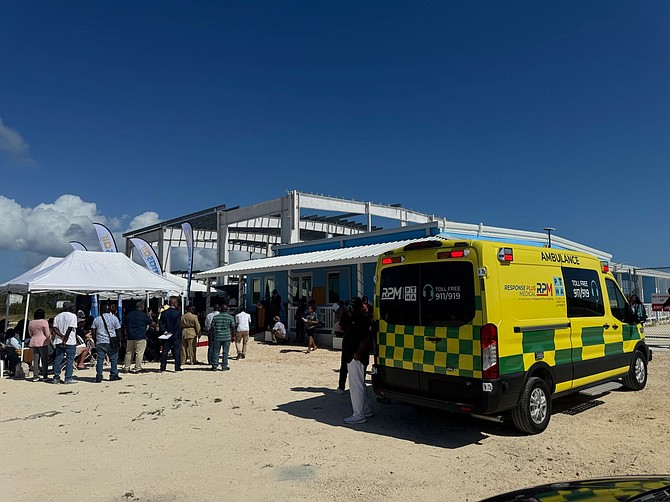
The Bahamas government has initiated a significant upgrade to its emergency medical response capabilities with the deployment of a specialized aviation ambulance to Mayaguana International Airport. This strategic move forms part of a comprehensive national aviation safety and emergency preparedness strategy developed through a collaborative Heads of Agreement between the Government of The Bahamas, Bahamas Aviation Climate and Severe Weather Network (BACSWN), and Response Plus Medical (RPM).
Prime Minister Philip Davis emphasized that this deployment represents the initial phase of an ambitious plan to equip Family Islands airports with advanced emergency response resources. The initiative directly addresses the country’s international obligations under the International Civil Aviation Organization (ICAO) standards, which mandate specific emergency recovery services for participating nations.
The Mayaguana deployment marks the first of approximately 50 aviation-spec ambulances destined for strategic locations throughout the Bahamian archipelago. These vehicles, equipped with state-of-the-art medical technology and aviation-grade safety features, will significantly enhance emergency medical coverage across the nation’s 173,000 square miles of airspace.
A critical component of this initiative involves the establishment of the Caribbean’s first NextGen Meteorological Watch Office under BACSWN’s supervision. This advanced facility will provide real-time flight tracking, coordinate crash response and search-and-rescue operations, and deliver live meteorological updates for aircraft and vessels operating within Bahamian territory.
The comprehensive program extends beyond equipment deployment to include institutional support through a forthcoming agreement with the Department of Public Health. This collaboration will encompass service regulation, specialized training, and staffing solutions where necessary, ensuring sustainable emergency response capabilities across the island chain.