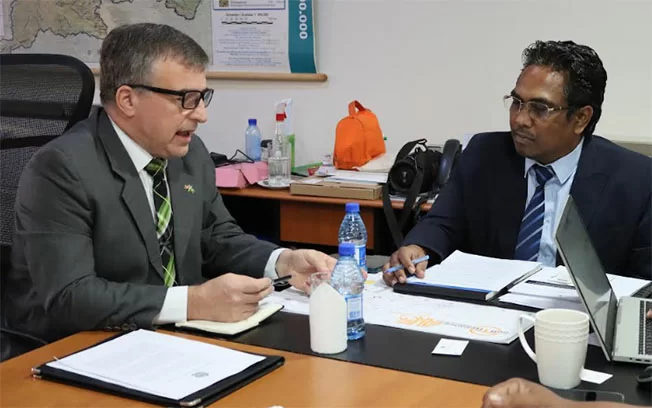
Suriname and Brazil are embarking on an ambitious agricultural partnership aimed at enhancing food security, technological advancement, and trade expansion. The collaborative initiative emerged during high-level discussions between Mike Noersalim, Suriname’s Minister of Agriculture, Livestock, and Fisheries, and Brazilian Ambassador Felipe Costi Santarosa.
The diplomatic exchange sets the stage for a technical mission scheduled for late March, where both nations will develop concrete cooperation projects. A primary focus involves strengthening Suriname’s livestock sector, which currently depends heavily on Brazilian poultry imports. While beef imports remain limited, Minister Noersalim emphasized that expanding local production would reduce consumer prices and increase national self-sufficiency.
Beyond livestock, the partnership explores opportunities in horticulture, particularly passion fruit cultivation. Despite having processing facilities for passion fruit pulp, Suriname struggles with insufficient fruit supply. Both countries are investigating the legal introduction of premium Brazilian varieties, including the Giant F1 strain, to scale production capabilities.
Rice cultivation represents another priority area. Through knowledge exchange with Brazil’s Agricultural Research Corporation (EMBRAPA), Suriname aims to increase yield per hectare while advancing its dryland rice project as part of broader agricultural modernization efforts.
The collaboration also targets production cost reduction in livestock and aquaculture. Suriname is exploring strategies to replace imported soy and corn with domestic production, with Brazil providing technical expertise in establishing sustainable supply chains. Additional opportunities exist in developing freshwater cage culture systems for fisheries.
Minister Noersalim highlighted Suriname’s potential to become Brazil’s strategic gateway to European markets, leveraging its logistical advantages and connections to the Surinamese community in the Netherlands.
The upcoming technical mission on March 26-27 is expected to yield detailed project proposals and potential financing arrangements for passion fruit cultivation, poultry sector development, and rice production. This bilateral cooperation marks a significant step toward creating a more productive and sustainable agricultural sector in Suriname.