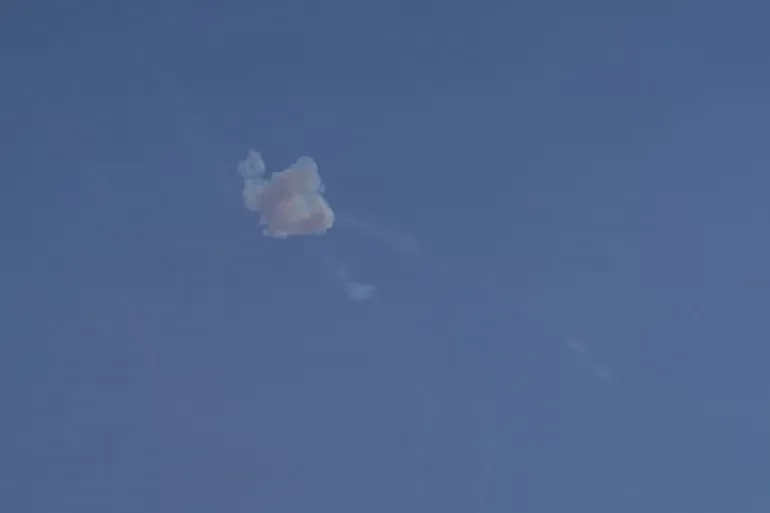
The Middle East witnessed a significant escalation in regional tensions on Saturday as Iran launched coordinated rocket attacks against multiple Gulf states in retaliation for previous American and Israeli airstrikes. The offensive marks a dangerous expansion of conflict into a region traditionally known for its relative stability and security.
Abu Dhabi confirmed at least one fatality from the attacks, with officials reporting powerful explosions and thick plumes of smoke across multiple neighborhoods. Bahrain announced that a service center belonging to the US Fifth Fleet had been directly hit, while eyewitnesses described scenes of gray smoke rising amid blaring sirens.
Several nations successfully intercepted incoming rockets before they reached their territories. Kuwait, Qatar, and Jordan activated defense systems to neutralize threats, while residents in Doha reported multiple explosions throughout the capital. Initially, many citizens continued daily activities until official warnings urged sheltering indoors, resulting in dramatically reduced street presence and traffic flow.
International aviation authorities responded by closing airspace across the Middle East, with flight tracking data revealing virtually empty skies above Iran and surrounding nations.
The international community expressed grave concerns through multiple channels. The European Union described the situation as “deeply worrying” and called for maximum restraint from all parties, emphasizing civilian protection and adherence to international law. European Commission President Ursula von der Leyen and European Council President António Costa jointly stressed the critical importance of calm and diplomatic engagement.
The International Red Cross Committee warned of a “dangerous chain reaction” of military violence potentially devastating civilian populations. President Mirjana Spoljaric urged nations to respect rules of engagement and demonstrate political will to prevent further casualties and destruction.
Oman, serving as primary mediator in US-Iran negotiations, expressed concern about the violence, with Foreign Minister Badr Albusaidi warning that escalation serves neither US interests nor global peace, urging Washington to avoid deeper entanglement.
France announced plans to convene an emergency UN Security Council meeting, with President Emmanuel Macron labeling the escalation dangerous and calling on Iran to negotiate “in good faith” regarding nuclear and ballistic missile programs to prevent regional destabilization.
Qatar condemned the attacks on its territory—where the US Al Udeid Air Base is located—as a flagrant violation of sovereignty and direct threat to national security, reserving its right to respond under international law.
The UAE denounced the attacks in “the strongest terms,” characterizing them as “dangerous escalation” and “cowardly acts” threatening civilian safety. Bahrain similarly described the Fifth Fleet attack as “treacherous,” while Kuwait warned that further escalation would deepen regional instability.
Saudi Arabia issued its strongest condemnation of the attacks and warned of serious consequences. Pakistan joined in condemning the violence while calling for immediate de-escalation through resumed diplomatic negotiations.
Russia accused the US of masking military actions behind nuclear talks and urged the international community to objectively assess “irresponsible actions” further destabilizing the region.
Ukraine held Iran responsible for the escalation, referencing Tehran’s harsh crackdown on protests earlier this year. Norway stated that Israel’s preventive attack violated international law without demonstrating immediate threat requirements.
Belgium lamented that diplomatic efforts failed to achieve earlier resolution, emphasizing that the Iranian people should not bear the cost of their government’s policies.