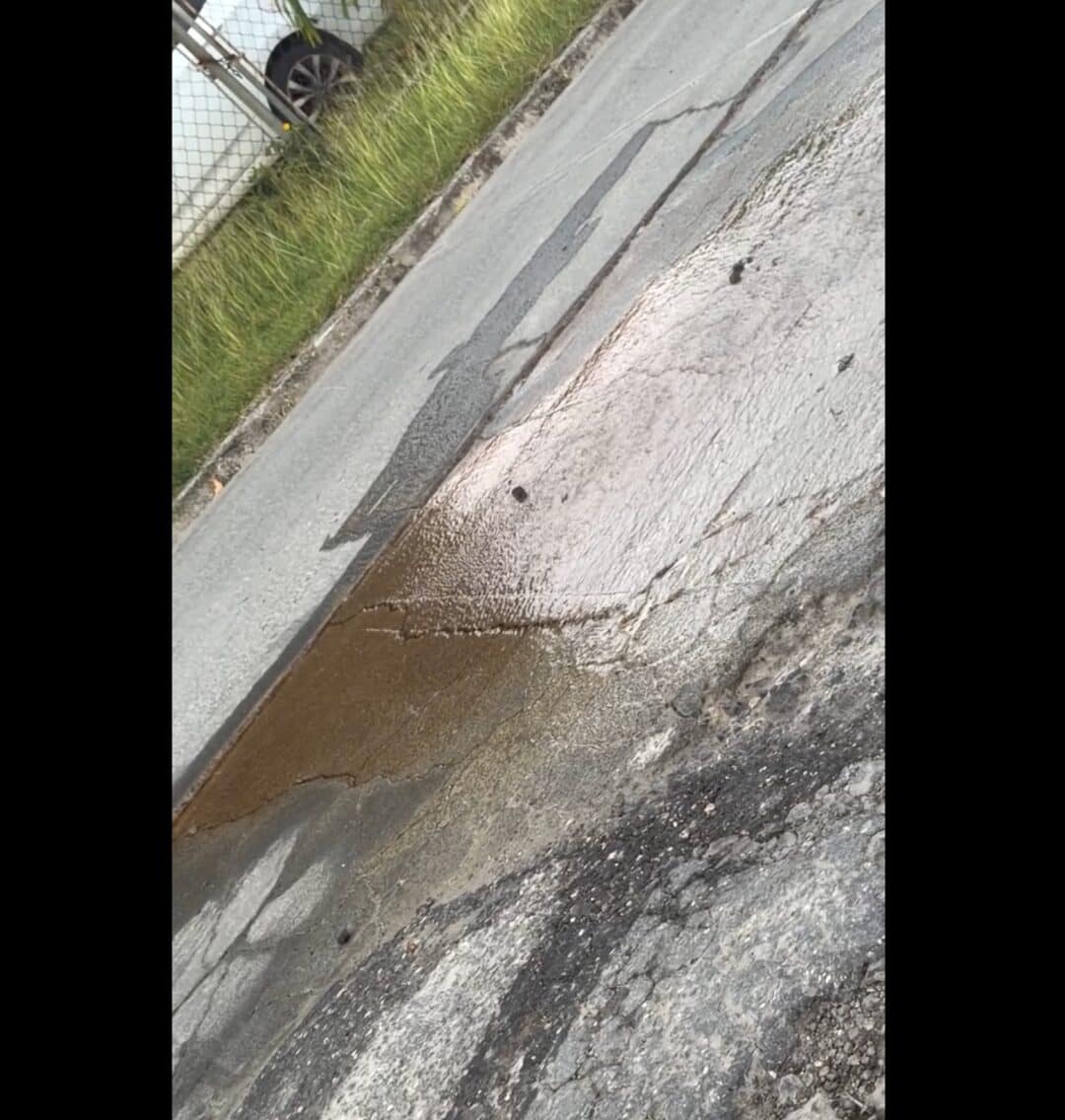
In a striking display of infrastructural neglect, a critical water pipe rupture near Antigua’s Government Transport Board has persisted for over three months despite repeated citizen reports, exposing systemic failures in public utilities management. The issue gained prominence after local resident Murrain publicly denounced the authorities’ inaction, highlighting the absurd contradiction between this continuous water wastage and concurrent supply shortages affecting multiple communities.
The damaged pipeline, located on a road frequently traveled by citizens obtaining driver’s licenses, has been discharging untreated potable water directly onto the roadway since early February. Murrain documented having reported the problem multiple times, most recently three weeks ago, when officials acknowledged the complaint existed in their system but failed to execute repairs. ‘The pipe remains burst and water continues flowing unabated down the road,’ she stated, expressing frustration over the blatant resource mismanagement.
This visible waste occurs against a backdrop of severe water rationing affecting Murrain’s community and other regions across Antigua. Residents reportedly endure regular service interruptions and have received official notifications attributing these shortages to insufficient water reserves. The prolonged leakage represents not just infrastructure deterioration but also significant financial and environmental costs, with thousands of gallons of treated water lost daily.
Murrain characterized the situation as ‘completely unacceptable’ and demanded immediate intervention from the Antigua Public Utilities Authority (APUA). Her public appeal emphasized the need for transparent accountability mechanisms within public service institutions. The case has sparked broader discussions about maintenance responsiveness, resource allocation equity, and environmental conservation priorities in Antigua’s public utilities sector. As water security becomes increasingly pressing due to climate challenges, such incidents highlight the urgent need for infrastructure modernization and more responsive public service frameworks.