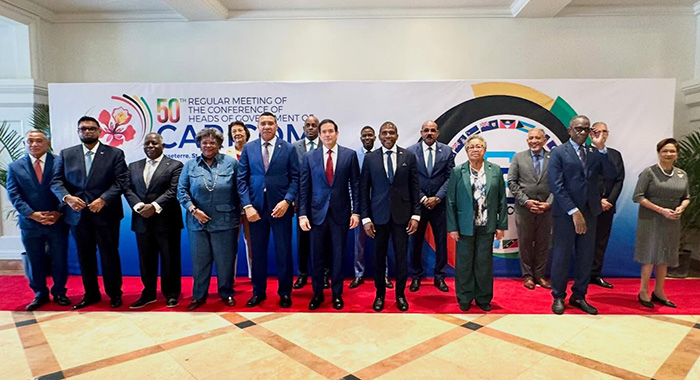
BASSETERRE, St. Kitts – U.S. Secretary of State Marco Rubio addressed Caribbean Community (CARICOM) leaders during their 50th regular summit on Wednesday, outlining Washington’s commitment to forging a revitalized partnership with nations across the Western Hemisphere. In his closed-door remarks, Rubio emphasized a dual-focused strategy centered on combating transnational security threats and unlocking new economic opportunities, particularly in energy.
Rubio identified transnational criminal organizations as the most urgent security challenge facing the region, noting their funding and power often rival or exceed that of the nation-states they threaten. He described an ‘interlocked challenge’ primarily fueled by narcotrafficking, which poses a direct danger to transit countries and ultimately to U.S. national security. The Secretary highlighted alarming levels of armament within these groups, acknowledging that weaponry often originates from the United States, and pledged intensified law enforcement cooperation to disrupt these supply chains.
Drawing parallels to the destabilizing influence of drug cartels in Mexico, Rubio called for collective regional collaboration. He pointed to U.S. actions, including designating certain groups as terrorist organizations and sanctioning individuals who support them, as evidence of a serious commitment to this shared challenge.
Shifting to economic cooperation, Rubio underscored energy as a critical area for partnership. He expressed U.S. interest in supporting Caribbean nations in responsibly exploring and developing their energy resources to generate wealth and prosperity for their citizens.
A significant portion of the address focused on Venezuela, where Rubio stated without apology that the country is ‘better off today than it was eight weeks ago.’ He praised the progress made by interim authorities led by Delcy Rodríguez, citing the release of political prisoners, closure of the infamous Helicoide prison, and the redirection of oil revenue to benefit the people, including payroll for government services and purchases of essential medical equipment. While acknowledging a long road ahead, Rubio confirmed the U.S. has reopened its embassy in Caracas and is committed to supporting Venezuela’s transition from stability to recovery, ultimately contingent upon the legitimacy of fair democratic elections.
Rubio concluded by framing U.S. prosperity and security as ‘intricately tied’ to that of the Caribbean Basin. He positioned his presence at the summit as a tangible demonstration of this commitment, aiming not to reset but to reinvigorate longstanding relationships. He pledged to make this partnership a personal priority for the remainder of his tenure, intending to leave a foundation of strong and stable relations for his successor.