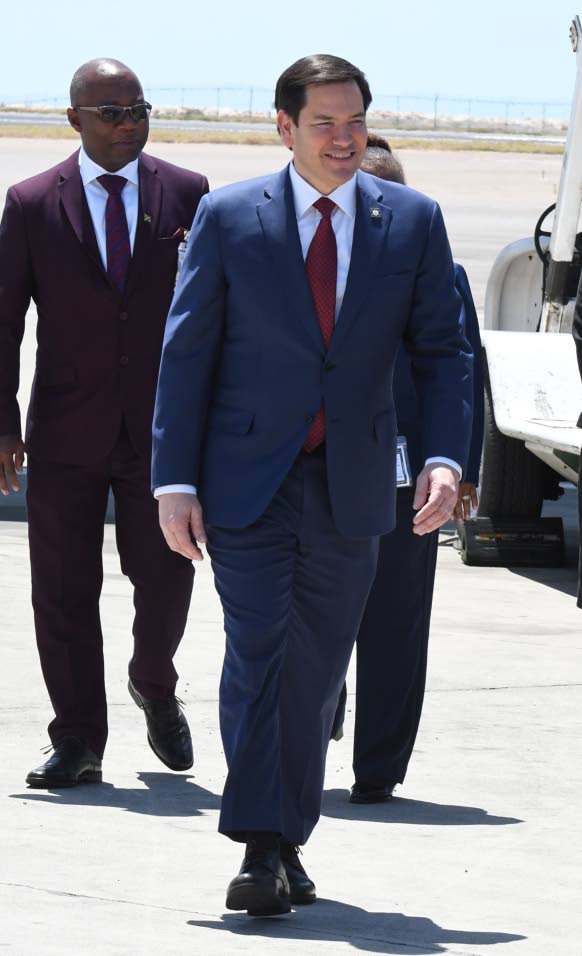
WASHINGTON, DC — U.S. Secretary of State Marco Rubio is set to participate in a high-level summit of Caribbean nations this Wednesday, representing a significant diplomatic engagement for the Trump administration. The meeting of the Caribbean Community (Caricom), hosted in St. Kitts and Nevis, will serve as a platform for addressing critical regional issues including immigration enforcement and policy coordination regarding Venezuela and Cuba.
State Department spokesman Tommy Pigott confirmed Rubio’s attendance, noting the Secretary would articulate President Trump’s priorities including combating illegal immigration and reinforcing hemispheric stability. ‘Secretary Rubio will reaffirm the United States’ commitment to collaborative efforts with Caricom member states to promote prosperity and security throughout the region,’ Pigott stated.
The summit occurs amid ongoing regional evaluation of Venezuela policy following the January 3rd U.S. military operation in Caracas that resulted in the capture of leftist leader Nicolas Maduro. The Trump administration has since intensified pressure on interim President Delcy Rodriguez through control mechanisms over Venezuela’s vital oil industry and implied military threats to ensure compliance.
While Caribbean nations have maintained cautious public statements regarding Venezuela, many have privately aligned with the U.S. position against Maduro’s government, which has been widely criticized for territorial claims against Guyana and causing regional instability through economic collapse and mass migration.
The diplomatic calculus becomes more complex regarding Cuba, which maintains historical ties with numerous Caricom members despite not belonging to the bloc. The island nation faces severe energy shortages after U.S. sanctions disrupted Venezuelan oil shipments, its primary energy source, while simultaneously threatening penalties against alternative fuel suppliers.
Rubio, a Cuban-American politician with longstanding opposition to Cuba’s communist government, has moderated his public rhetoric despite his historical advocacy for regime change. The administration claims to be pursuing an unspecified agreement with Havana, though previous efforts to pressure Caribbean nations to remove Cuban medical professionals faced significant resistance during last year’s Caricom meeting in Jamaica.
Additional summit agenda items include addressing Haiti’s protracted crisis, where a U.S.-backed prime minister recently assumed control from a transitional council that failed to curb gang violence or conduct elections.
Rubio’s visit marks the highest-level U.S. diplomatic engagement with St. Kitts and Nevis, a microstate of approximately 50,000 people that gained independence from Britain in 1983.