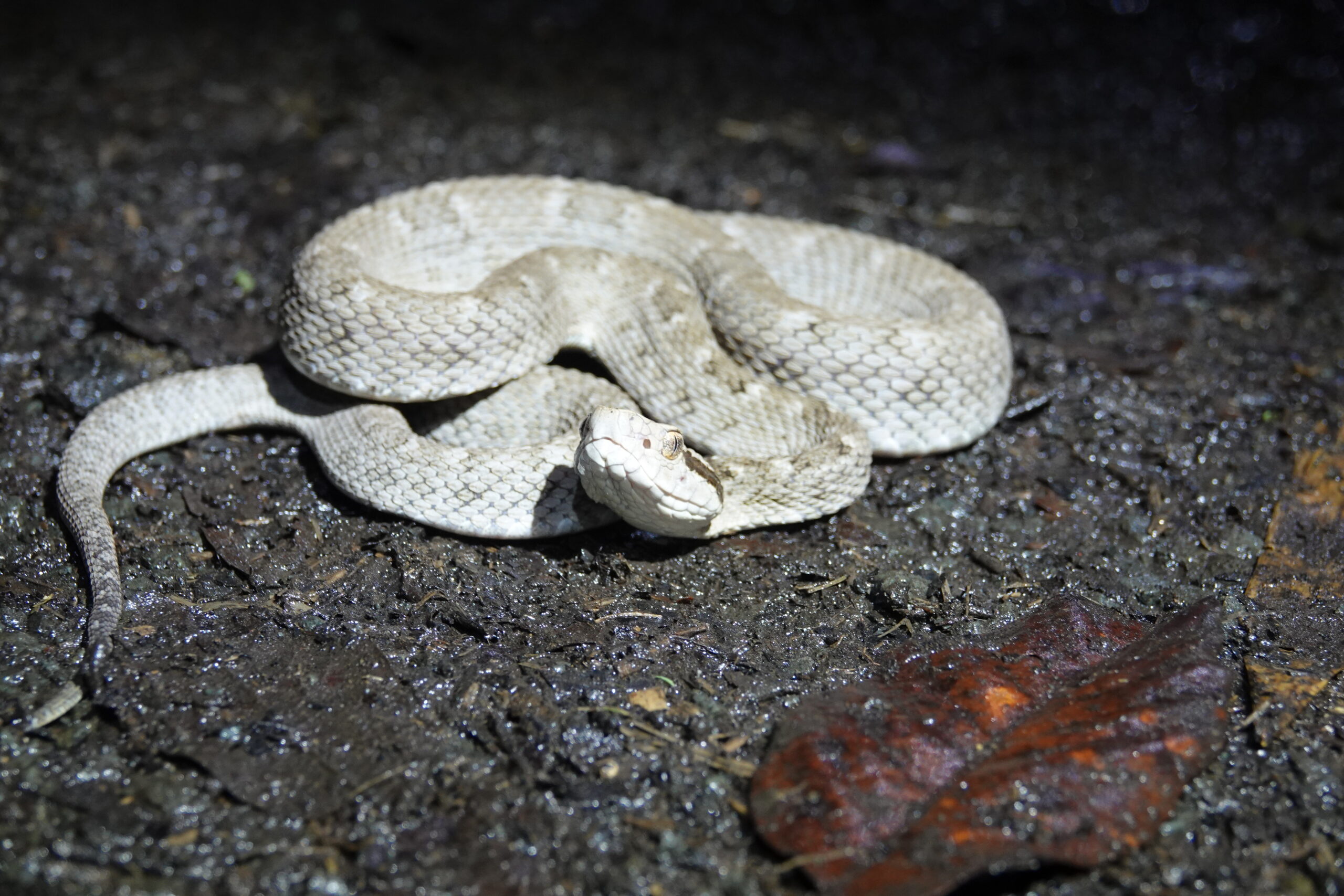
The tranquil community of Thomazo in Saint Lucia has been thrust into a state of heightened alert following the tragic death of Valence Alfred, who succumbed to multiple bites from a fer-de-lance snake on January 20. This incident has ignited urgent calls for intervention as residents report increasing encounters with the venomous species near residential areas.
According to eyewitness accounts, Alfred was working at a local property when he experienced a sudden sharp sting on his hand. While investigating the source, he was struck again in the face by what he described as a large snake. Despite managing to navigate through dense vegetation to seek help near a main road, and receiving medical attention including antivenom at Owen King European Union Hospital, Alfred passed away the following day.
The response time of emergency services has come under scrutiny, with witnesses reporting a 20-30 minute wait for ambulance arrival. Meanwhile, subsequent searches of the incident area revealed three smaller snakes, though the specific specimen responsible was not located.
This tragedy has exposed a growing tension between human settlement and wildlife habitat in forest-adjacent communities. Residents report unprecedented frequency of nocturnal sightings, with recent incidents including a doctor bitten two weeks prior (who survived due to prompt treatment) and a salon owner discovering a fer-de-lance at her doorstep at midnight.
Sammy, a local bakery operator who uses the alias Kenterberry, articulated the community’s anxiety: ‘Right now, everyone is anxious; they really want something to be done about it. The feeling isn’t a nice feeling. Sometimes when you go to bed, you don’t want to sleep because you have snakes on your mind.’
Experts and residents point to several potential factors driving increased human-snake interactions. Reduced agricultural activity in surrounding areas may have diminished natural habitat management, while wild pig populations are potentially displacing snakes from forested zones. Some residents advocate for increased chemical spraying, with one individual reportedly planning to use a mixture containing Gramoxone—a approach that raises concerns among environmental specialists.
Lenn Isidore, a biologist and reptile specialist, cautioned against aggressive chemical interventions: ‘The use of harsh chemicals, including Gramoxone, may have long-term environmental consequences, including soil degradation.’ Instead, he recommends practical measures such as foliage management, clearing yards of potential snake shelters, and proper waste disposal to reduce rodent populations that attract the snakes.
Institutional responses are emerging through initiatives like the Saint Lucia Fer-de-Lance Project, a collaborative effort between Fauna & Flora, Durrell Wildlife Conservation Trust, the Forestry Department, and the Ministry of Health. The project aims to reduce snakebites while maintaining stable snake populations and exploring potential medical benefits of venom research.
Project Coordinator Beana Joseph explained that community workshops have already trained over 70 residents in safe snake handling and identification. Notably, the project also addresses potential commercial applications of venom, ensuring Saint Lucia retains control over any biological compounds derived from its endemic species.
With snakebite treatment covered under Saint Lucia’s Universal Health Coverage program (seven cases treated since February 2025), the nation faces the complex challenge of balancing public safety with conservation of a species found nowhere else on Earth. As Thomazo residents grapple with their newfound vulnerability, the search continues for solutions that protect both human lives and ecological integrity.