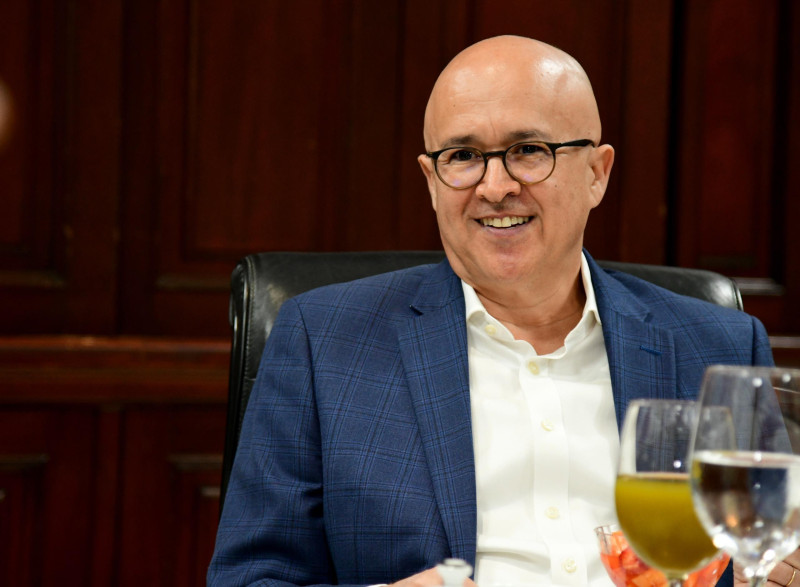
SANTO DOMINGO, DR – Prominent political figure Francisco Domínguez Brito has issued a stark warning regarding escalating violence and disrespect within educational institutions, characterizing the situation as a national emergency that demands immediate state and societal intervention.
Addressing recent disturbing incidents at schools across Santo Domingo, San Francisco de Macorís, and Santiago, Domínguez Brito condemned the current climate as profoundly unacceptable. “Educators increasingly confront threats, verbal abuse, and physical violence without adequate institutional backing,” he stated. “The erosion of teacher authority and their resulting vulnerability directly undermines educational institutions and disrupts the broader social fabric of communities.”
Domínguez Brito presented a nuanced analysis, asserting that this behavioral crisis among adolescents stems from complex societal failures rather than individual student culpability. He identified key contributing factors including family disintegration, insufficient community support systems, premature exposure to alcohol and narcotics, and a critical deficiency in effective preventive government strategies. “This represents a pervasive social dilemma that our nation has neglected for far too long,” he emphasized.
In response to this multifaceted challenge, the leader proposed a comprehensive action plan. His recommendations include reinforcing school psychological and guidance services, implementing definitive protocols for educator protection, developing robust mechanisms for violence reporting and resolution, and enhancing collaborative social outreach programs to identify at-risk youth vulnerable to substance abuse and academic abandonment.
Concluding his appeal, Domínguez Brito underscored the fundamental importance of safeguarding educators: “Ensuring teacher security is synonymous with protecting our nation’s future. Our schools must transform into secure environments where educators operate with respected authority, dignity, and substantive institutional support.”