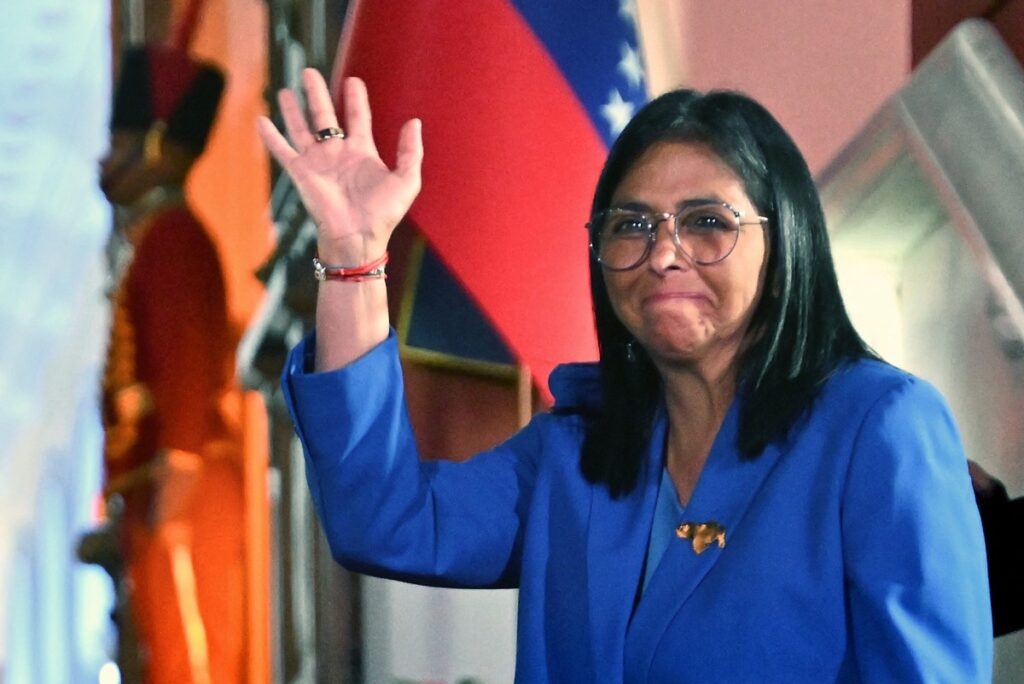
CARACAS, Venezuela — In a significant political development, Venezuela’s National Assembly has unanimously enacted an amnesty law leading to the release of 379 individuals classified as political prisoners. The legislation, passed by interim authorities following the U.S.-backed ouster of former leader Nicolas Maduro, represents one of the most substantial prisoner releases in recent years.
Jorge Arreaza, the lawmaker overseeing the amnesty process, announced in a televised address that the 379 detainees “must be released, granted amnesty, between tonight and tomorrow morning.” He confirmed that the Public Prosecutor’s Office had formally submitted requests to judicial authorities to implement the amnesty measures.
The controversial legislation contains significant exemptions that have drawn criticism from opposition figures and human rights organizations. The amnesty explicitly excludes individuals prosecuted for “promoting” or “facilitating armed or forceful actions” against Venezuela’s sovereignty by foreign actors—a provision that interim President Delcy Rodriguez has previously invoked against opposition leader Maria Corina Machado. The law also excludes security force members convicted of terrorism-related activities.
This has created painful divisions among families of detainees. Hiowanka Avila, whose brother was arrested in connection with an alleged 2018 drone assassination attempt against Maduro, expressed disappointment outside Rodeo 1 prison: “Many of us are aware that the amnesty law does not cover our relatives.”
The implementation process itself faces skepticism. Alfredo Romero of the NGO Foro Penal noted that “amnesty is not automatic” and requires judicial review—a concerning prospect given Venezuela’s courts are widely viewed as instruments of previous repression.
Despite these limitations, some opposition figures have already benefited. Juan Pablo Guanipa, a Machado ally, announced his complete release from detention shortly after the bill’s passage, declaring on social media: “I am now completely free.” He immediately called for the liberation of all remaining political prisoners and the return of exiles.
The interim government, led by Rodriguez—formerly Maduro’s vice president—defended its actions. In a state television address, Rodriguez asserted that “we are building a more democratic, more just, and freer Venezuela, and it must be with the effort of everyone.”
However, exiled opposition leader Edmundo Gonzalez Urrutia, widely considered the legitimate winner of the fraud-marred 2024 presidential election, offered a more cautious perspective: “There will be no lasting reconciliation without memory or responsibility. A responsible amnesty is the transition from fear to the rule of law.”
The developments occur against the backdrop of heightened U.S. involvement in Venezuelan affairs, with Washington having taken control of the country’s oil sales following Maduro’s extradition to New York to face drug trafficking charges.