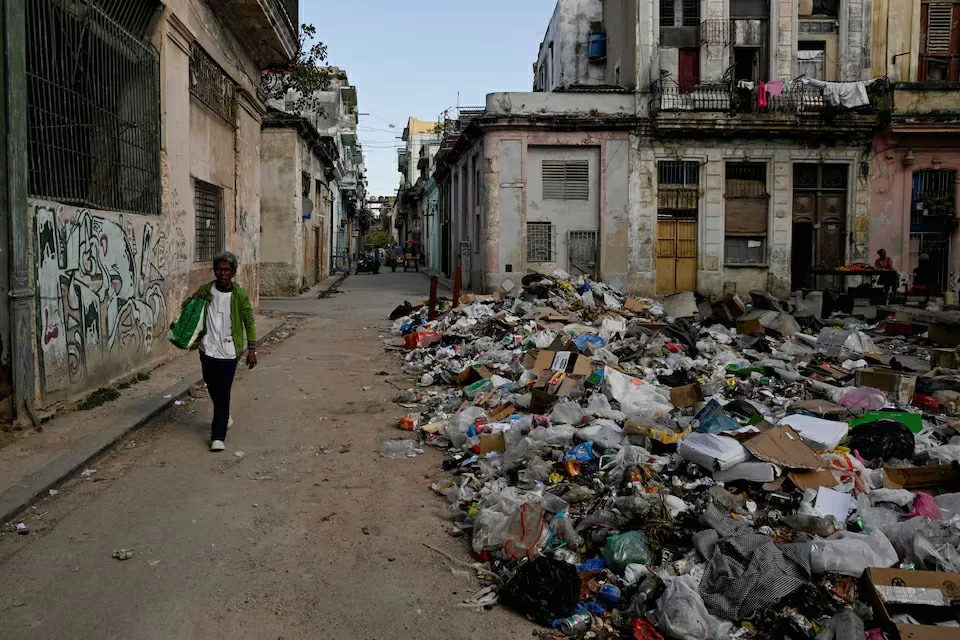
The streets of Havana have transformed into landscapes of accumulating waste, creating a visible humanitarian crisis directly linked to tightened U.S. sanctions targeting Cuba’s fuel supplies. With only 44 of Havana’s 106 garbage trucks operational due to severe fuel shortages, municipal waste collection has slowed to a critical level, leaving cardboard boxes, plastic bottles, and assorted debris piled at street corners throughout the capital.
Residents now navigate around growing waste mountains while some scour through discarded materials for reusable items. Jose Ramon Cruz, a Havana local, reported: ‘The garbage is everywhere in the city. It’s been over ten days since a garbage truck last came through.’ Similar scenes are emerging across other Cuban cities, with the island’s 11 million inhabitants using social media to warn about impending public health risks.
The Cuban government has implemented rationing measures to protect essential services in a nation already grappling with severe shortages of food, fuel, and medicine. The country’s oil supply has dramatically declined over the past two months after Venezuela—once Cuba’s primary supplier—halted deliveries in mid-December. Mexico similarly ceased fuel shipments following U.S. threats of import tariffs for nations supplying Cuba.
Amid the crisis, Russian media reports indicate preparations to ship crude oil and fuel to Cuba, though no concrete timeline has been established. The current situation represents an escalation of the U.S. embargo maintained since 1960, with the Trump administration intensifying pressure through sanctions against vessels transporting oil to Cuba and tariff threats against suppliers.
The United Nations has expressed deep concern, with Secretary-General António Guterres urging renewed dialogue and respect for international law. UN teams are currently collaborating with Cuban authorities to support humanitarian assistance efforts. Meanwhile, leaders from Mexico and Venezuela continue warning about the severe humanitarian consequences of the blockade.
This developing garbage crisis in Havana serves as a stark demonstration of how geopolitical tensions directly impact civilian populations, creating urgent needs for solutions that alleviate human suffering and safeguard public health.